
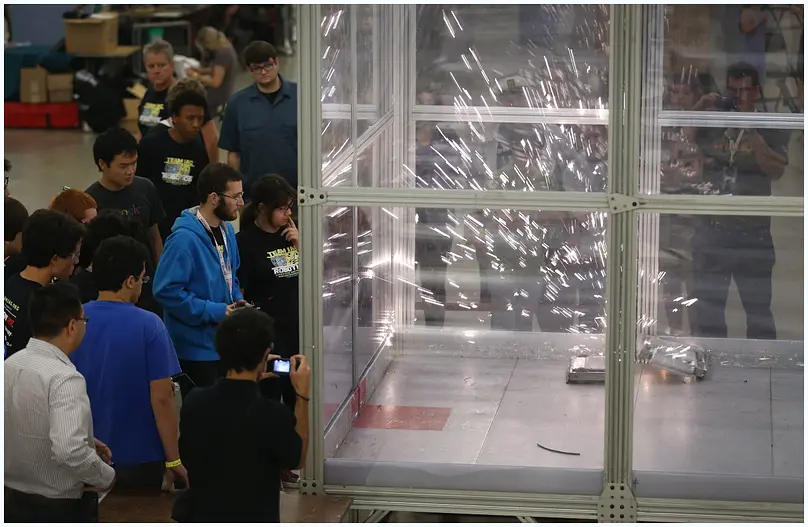
Boston. Not just beans and historic walks anymore. Tomorrow, the city's inaugural Tech Week ignites, a six-day explosion of innovation showcasing its underappreciated tech prowess. Andreessen Horowitz, the venture capital titan, plants its unique, decentralized conference model in one of America's most potent technology hubs. Forget the typical convention hall. This is 572 distinct events, scattered across eight neighborhoods. Most sessions? Absolutely free.
For founders, engineers, students, and investors who haven't yet registered: the window, surprisingly, is still open. Hosts confirm attendance individually after applicants register through each event’s page, and many sessions remain available even now.
Boston's Unique Blueprint
This isn't just another Silicon Valley clone. While New York leans heavily into fintech and media, and San Francisco obsesses over consumer AI, Boston's calendar tells a different story. Think biotech. Computational biology. Robotics. Physical AI. University research. It's a lineup that directly reflects the region's actual industrial strengths, not just market fads.
Boston's tech credentials often fly under the radar, perhaps to its own detriment. Yet, Kendall Square in Cambridge? It's home to over 1,000 biotech and pharma companies within a few square miles. Pfizer, Novartis, Sanofi, Takeda – their major R&D operations? Right there. Massachusetts startups, in 2025, pulled in a staggering $16.7 billion in venture capital. Second only to the Bay Area. LabCentral, that shared lab infrastructure anchoring the Kendall cluster, has nurtured 344 companies since 2013. These ventures collectively raised $21.85 billion. Nearly 8,000 life sciences jobs created. Not bad for 'understated.'
Jonathan Lai, a partner at a16z, was direct. Ahead of the event, he told the Boston Globe,
"I think it's the best time in a decade to start a company in Boston."
Strong words. The city's mayor, naturally, welcomed the week. And Sandy Lacey from the Perkins School for the Blind hopes it will “bring to light the importance of solving challenges and investing in this space.” A pointed reference to Perkins' DisabilityTech Investor Summit – one of the week's truly distinctive programming elements.
Over 80 founding hosts are participating. Local anchors. National brands. Anthropic. HubSpot. Whoop. Klaviyo. DraftKings. Wayfair. Stripe. IBM. Boston Dynamics. Even MIT's The Engine. All on the calendar, alongside a16z itself.
Programming Highlights: From AI to Pharma to Sports
The official a16z kickoff, backed by Fenwick and HSBC, runs Tuesday evening. But the day actually begins earlier. IBM, the Massachusetts AI Hub, and Red Hat are “Ringing in the Inaugural Boston AI Tech Week” in the Seaport. Meanwhile, at Venture Lane, founders get seven minutes each for “UGLY TALK: Boston Tech Founder Open Mic + Mixer.” Candid company-building stories. Could be messy. Could be brilliant.
Wednesday's highlight? “From Models to Medicines: AI Tools Powering Drug Discovery.” A joint effort from a16z, MassBio, and Eli Lilly & Company. This isn't theoretical. It’s a direct link between AI investment and pharmaceutical R&D, happening precisely where much of that R&D unfolds.
Thursday is jam-packed. Anthropic's “Founders' Lab: AI for Life Sciences.” Boston Dynamics: “Celebrating Robotics & Physical AI.” DraftKings and Whoop combining forces for “AI-Enabled Analytics.” And then there's BASE-X's “Future of Dual Use: What's Pacing Human-Out-Of-The-Loop Autonomy?” Heavy stuff. Policy. Technical dimensions. Autonomous systems. It makes you think.
Friday gets interesting. Wasabi Technologies asks, “The New MVP? Inside the AI Playbooks of the Red Sox and Bruins.” AI in professional sports? Why not. At Fenway Park, Air Space Intelligence is “Hacking the Fourth Dimension.” And at Havana Event Space, a session on “How to Actually Build at the Speed of AI and Outship a Bigger Team.” Operating realities for lean, AI-powered teams. Pragmatism.
Saturday is the build day. Two simultaneous hackathons: the AI x Bio Hackathon, and the AI Agents in Healthcare Hackathon. Plus, Rasa's “Always-On Agent Hackathon,” challenging participants to build persistent digital coworkers. The future of work? Maybe. Biotech Pitch Competition from 2048 Ventures and BioLabs adds more fuel.
Sunday closes it all. Multi-Agent Orchestration Hackathon with Weights & Biases at MIT, hosted by CoreWeave. Building production-ready multi-agent systems. The week began with a bang and ends with a deep dive into advanced AI.
The events are neatly categorized: AI + Infrastructure, Bio + Health, Hackathons, Deep Tech & Robotics. Plus, dedicated tracks for Students, Founders, Engineers, and Investors. A serious spread. Platinum sponsors include a16z, Fenwick, HSBC, and IBM. Gold sponsors: Adobe, Atlassian, AWS, Cloudflare, Deel, Fireworks AI, and Google for Startups. Big names. Big commitments.
And that Perkins DisabilityTech Investor Summit? A four-hour session focused squarely on accessibility tech. This isn't just a side note. It’s a reflection of Boston’s unique position—a nexus of healthcare institutions, research universities, and founders driven by more than just profit. It really sets Boston apart.
Registration remains open for most events, free. A per-event signup through tech-week.com/calendar/boston. No single ticket for the whole shebang. Hosts confirm attendance individually. Some events? Invite-only. Capacity-limited. As expected. The week pushes through Sunday, May 31st, with sessions starting as early as 7:30 a.m. and stretching well into the evening, across two cities.
It’s not a traditional conference. This isn't one venue, one ticket. It’s a decentralized constellation of ideas, pitches, and breakthroughs. Andreessen Horowitz presents. Coordinates. But the real work, the real hosting, is done by the companies, the startups, the funds themselves. They manage their own events. They own it.
So, Boston Tech Week. More than a schedule. It’s a statement. A bold declaration from a city often overlooked, now demanding its rightful place at the forefront of the next technological wave. The question isn't whether Boston can compete; it's how long until everyone else catches on.

No comments yet. Be the first to share your thoughts!