
Forget the sports headlines. No NBA Finals upsets here, nor any last-minute Premier League dramas.
We're tracking a different kind of standings, one with profound implications for global capital: the world’s largest stock markets.
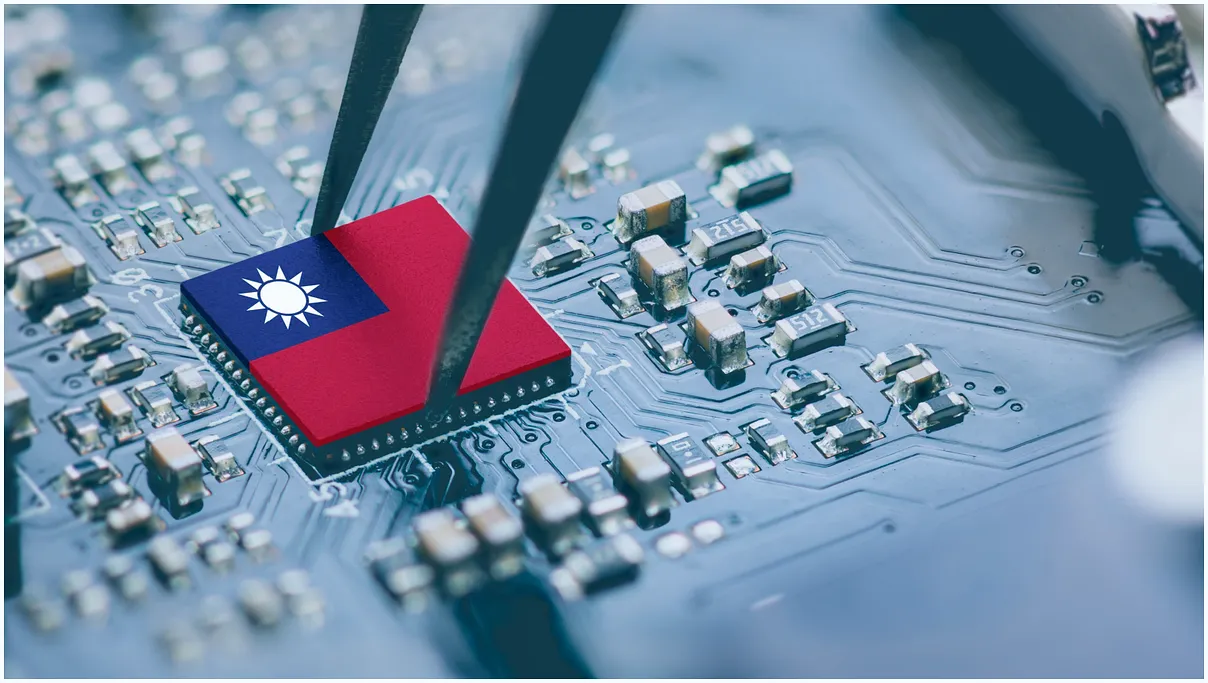
And this week, something remarkable happened. Taiwan edged out India, seizing the fifth-largest spot globally. It now trails only the titans: the U.S., mainland China, Japan, and Hong Kong. Quite a climb.
Bloomberg confirmed the shift, reporting Taiwan’s market capitalization soared to an impressive $4.95 trillion as of Monday, just eclipsing India’s $4.92 trillion. A narrow margin, perhaps, but a monumental leap.
What fueled this ascent? Three letters: A. I.
More specifically, Taiwan Semiconductor Manufacturing Co. Ltd. (TSMC). The sheer scale of it. This isn't just another tech company; it’s the engine powering everything from your smartphone to the most advanced AI data centers on the planet. Its chips are everywhere.
TSMC’s stock, known as TSM, has surged 28% since the new year began. An astounding 89% over the past twelve months. That’s market-moving momentum. Consider this: the company now commands a staggering 42% of Taiwan’s benchmark stock index, the TAIEX. It’s almost a national monomania.
The country's market is, in essence, becoming a "one-stock index."
This level of market concentration is, frankly, unusual for a major global player. It screams two critical truths. First, AI demand isn't some niche tech fad; it’s a global force reshaping economies. Second, the semiconductor industry isn't just important; it’s utterly central to that growth. We’re witnessing a "symbolic macro moment." AI isn’t just influencing a sector; it's redrawing national financial maps.
So, let's break down how TSMC’s chip empire lifted Taiwan's stock market to this new ranking. What does it reveal about the broader AI investment frenzy?
The Chip Titan's Unrelenting Surge
The numbers don't lie. TSMC's recent quarterly report? Eye-popping. First-quarter profit shot up by 58%, almost entirely on the back of AI chip demand. Its computing division alone accounted for 61% of total revenue. That’s a dependency many companies would envy.
And it's about more than just quantity. It’s about cutting-edge tech. The company’s 7-nanometer or smaller advanced chips made up 74% of its total wafer revenue last quarter. Shipments of chips under 3-nanometers? A quarter of that revenue. These tiny wafers, the silicon foundation of integrated circuits, are getting smaller, more powerful, more efficient. That translates directly to AI prowess.
As TSMC pushes the boundaries of chip efficiency for the AI Revolution, its revenue from this segment isn’t just expected to climb. It’s projected to explode.
Markets are being repriced around AI supply chain importance, and countries with exposure to chip manufacturing, like Taiwan, are getting a valuation boost.
Company guidance predicts full-year 2026 revenue to climb more than 30% year-over-year. For the second quarter alone, they forecast revenue between $39 billion and $40.2 billion. A solid 10% sequential jump. These aren't just figures; they’re a statement of dominance.
TSMC isn't the only player stoking this fire. Nvidia Corp. (NVDA), the undisputed king of AI chips, just announced plans for a $150 billion annual investment in a new campus right there in Taiwan. The TAIEX, Taiwan's index, promptly responded, surging 1.7% to a record close that very day. It’s a clear signal.
Semiconductors, then, aren't merely making AI possible. They’re making entire companies—and nations—profoundly profitable. Global markets are re-evaluating, re-pricing, and re-calibrating around the sheer importance of the AI supply chain. Nations with skin in the chip manufacturing game, like Taiwan, are enjoying an unprecedented valuation boost.
But this surge also reveals a structural imbalance. When a national market can pivot so dramatically on the fortunes of a single AI supplier, it suggests the AI boom, while undeniably powerful, is also dangerously concentrated. Bottlenecks loom large.
The biggest winners? They’re in the "infrastructure layer." Think semiconductor manufacturers. But don’t forget data center operators. Or the energy systems that feed them. These are the physical enablers. Investors, then, aren't just betting on AI growth. They’re betting on which companies can actually build it.
And there's a potent accelerant to this trend. One still early enough for savvy investors to recognize: the rise of agentic AI systems.
Agentic AI. It's the "next generation," capable of making autonomous decisions, adapting to new data. Claude Cowork, Code—Anthropic’s AI assistants are prime examples. A new era.
We’ll be forced to adapt. It’s not a question of if.
Landbase, an agentic AI platform, reports this sector is the fastest-growing enterprise technology segment. A stunning 43.84% compound annual growth rate projected from 2025 to 2034. That’s an explosive trajectory.
TSMC, alongside giants like Nvidia, manufactures the advanced chips that underpin these complex systems. Agentic AI isn’t a direct product of these firms. But it's rapidly becoming one of the most powerful demand drivers across the entire chip manufacturing pipeline.
AI has already, in a few short years, fundamentally reshaped global financial leadership. And the next phase? It will reshape it again.
The real question: which parts of the market are truly positioned for what comes next?



No comments yet. Be the first to share your thoughts!