
London’s Clerkenwell, home to a sprawling 17th-century industrial complex, is about to witness a quiet revolution. Next month, the Quentin Blake Centre for Illustration swings open its doors. It's not just another gallery. This is being pitched as the world’s largest institution of its kind, a permanent national shrine to an art form often dismissed, yet one that shapes everything from political cartoons and fashion to the very fabric of digital culture.
Part museum, part gallery, part creative laboratory. Ambitious, yes. But it represents an extraordinary, perhaps overdue, attempt to drag illustration out of the shadows. To finally place it at the beating heart of British cultural life.
The Fight for Recognition
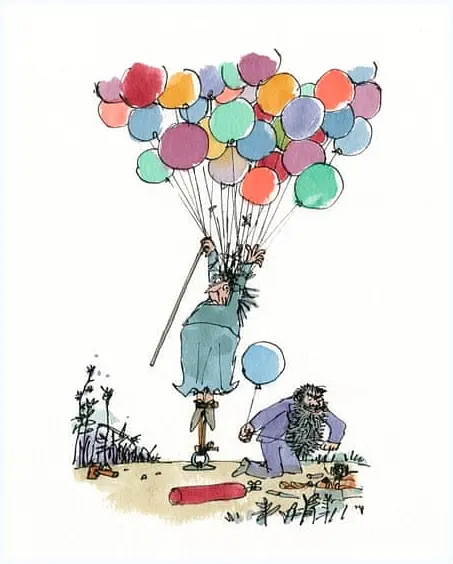
Eventually, this grand new center will house Blake’s own colossal archive: some 40,000 drawings. The sheer volume is staggering. Blake, now 93, has spent three-quarters of a century breathing life into the words of literary giants. Roald Dahl, of course, comes to mind instantly—try to picture Dahl’s world without Blake’s frantic, dip-pen energy. Impossible. But his collaborators also include Michael Rosen, John Yeoman, Sylvia Plath, and even Voltaire, alongside his own prolific output. Few can claim such a breadth of influence.
“More needs to be done to recognise the importance of all illustration as an art form,” Blake asserts. His words carry the weight of decades. “What is particularly wonderful about it is that it’s a language everybody understands.”
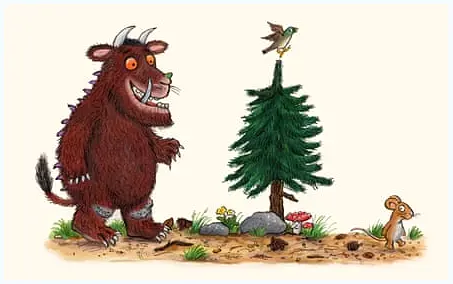
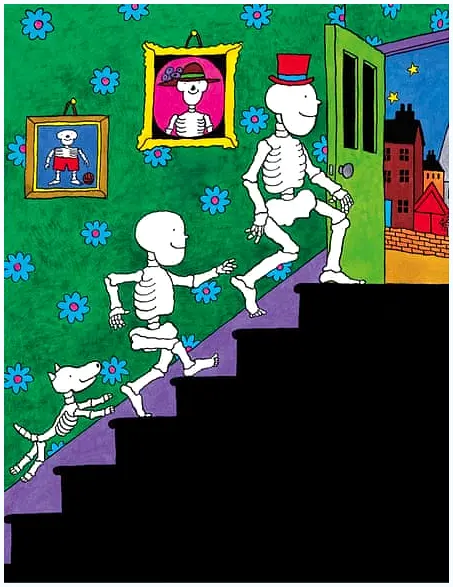
For too long, illustrators have been treated like afterthoughts. The decorators. The ones who come in once the house is built. But this couldn't be further from the truth. Consider The Twits. What do you see? Blake’s wild, scratchy depictions. Try to imagine Funnybones. Janet Ahlberg’s deceptively simple images often arrive before Allan Ahlberg’s words. Even a walk through Forestry England’s Gruffalo trails confirms it: Axel Scheffler’s designs—not Julia Donaldson’s text—loom out from the trees. That’s power.
“We are a bit in the shadow,” admits Scheffler. “Our books are called picture books, so we are an important part of the process. It’s a very underestimated art form, the author and illustrator creating something together. It’s hard to separate.”
“The shortest time I’ve ever spent writing a picture book was an hour, typing it into my phone on an aeroplane,” says author-illustrator Sarah McIntyre. “But they always take at least three or four months of intensive work to illustrate, nine or more hours a day, six days a week.”
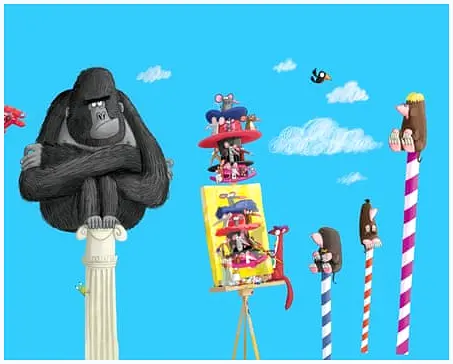
McIntyre has been a tireless advocate. A decade ago, she launched the “Pictures Mean Business” campaign. Its goal? For illustrators to finally receive proper credit for their immense contributions. She helped dismantle a widespread misunderstanding of what a picture book actually *is*.
Having dabbled in writing them myself, I can attest to their unique precision. Almost always 32 pages. Almost always read to a child by a caregiver. Most picture books exist at the precise, crucial juncture where text and illustration collide. Yank one component, the whole thing collapses.
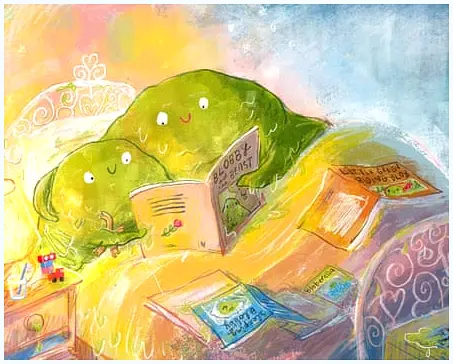
“I think illustrating a story is one of the primal human instincts,” says Huw Aaron, whose book Sleep Tight, Disgusting Blob recently clinched the Waterstones children’s book prize. “We don’t know if people were dancing or singing 40,000 years ago, but we do know they were making comics about people chasing cows, because they’re all over cave walls.”
The things an illustrator can do to a text are as varied as they are potent. Jim Field, known for Oi Frog! and The Lion Inside, sees illustration as an extra layer. “I’m not trying to do exactly what the words are saying,” he explains. “I’m trying to weave in sort of extra subplots or let the reader learn more about the character.”
Matty Long, the creative force behind the Super Happy Magic Forest series, puts it even more pointedly. His work has already leapt from picture books to chapter books to television.
“If the words are just describing the picture, then why have you got the words?” he says. “I want the images to do the bulk of the storytelling.”
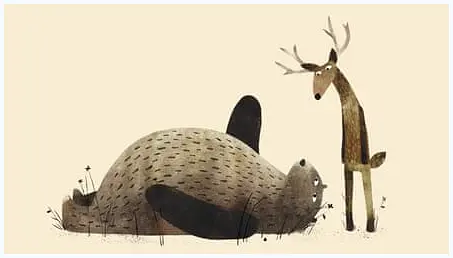
But sometimes, an illustrator takes it further. In I Want My Hat Back, Jon Klassen performs a sleight of hand: telling two distinct stories simultaneously. Read only the words, and it's simply a bear politely, fruitlessly, searching for his lost headwear. But the illustrations? They provide a context that runs subtly counter. The polite bear on the page is, in fact, fueled by murderous revenge. Children, Klassen notes, pick up on this tension.
“It seems to be where the truth of the thing should live,” Klassen says of this words-pictures dynamic. “I usually end up putting a half truth in the words, or leaving a lot of things out. I think that helps with kids because, when the text is outright incorrect, they can see that the pictures are telling the truth.”
Long before a child deciphers a single written word, they’ve already absorbed a universe visually. Ed Vere, creator of Waffles & Julius and a veteran of the Power of Pictures program for teachers, recalls a moment with Quentin Blake. “He asked some children what ‘indignant’ meant. Nobody knew. Then he quickly drew this indignant old lady, and every child exactly understood. It wasn’t just ‘angry’ or one of those black-and-white emotions. They all got the subtleties from his drawing.”
For Sophy Henn, behind the Happy Hills series, this is why the notion that picture books are mere stepping stones to “proper” books is profoundly misguided. By getting two streams of information, she argues, “you’re learning emotional awareness, you’re learning empathy, you’re learning to be critical. In the world we live in today, that is incredibly important. I wish there was more information out there to say that picture books are actually a more complex form of reading.”
“Children have got the most sophisticated little minds,” states Lauren Child, creator of Charlie and Lola. “They might be tiny, but they’re really big thinkers. They’re so visually smart in ways that adults aren’t. We use visual cues and aesthetics our whole life, but we lose that edge that we have when we first arrive.”
A picture book can offer a child their first opportunity to identify and name a big, swirling emotion. Nadia Shireen’s Barbara Throws a Wobbler uses vibrant images to depict feelings beyond mere text. “We have a period in the book where Barbara actually talks to the Wobbler, and it all got very metaphysical,” she remembers. “I had to say to my editor: ‘Is this mad? Are we expecting three-year-olds to go on a psychological journey?’”
Sometimes, illustration morphs a book into a storytelling tool, allowing children to become co-authors. In Jon Burgerman’s Splat!, for instance, readers blast the protagonist with new, often disgusting, objects on every page turn. “I wanted to make a book that could only be a book,” Burgerman explains. “I really celebrated the form of a picture book, and I wanted to make something that couldn’t be realised in any other form.”
Dan Ojari and his son Finn’s Is This a Plum? uses clever cutouts to hide objects in plain sight. “Someone sent me a video of their kid, who can’t read, and they are telling the story to their parents because the words are so simple,” Ojari says. “It has that feeling of ‘I know more than my parent, and I’m going to trick them.’”
The Joy of the Doodle
If all this makes picture book illustration sound rather grand, the process itself often begins in the most unassuming way: with a doodle. “The drawing has to come first,” says Matty Long, holding up an early sketch of a Super Happy Magic Forest character. Even in its nascent stage, it contained the core personality. “I have to convince myself that there’s an idea there worth pursuing, and I do that through the drawing.”
Sue Hendra shares the same ritual. She shows me her first sketch of Supertato, a character she co-created with Paul Linnet that has spawned a mini-empire of 15 books and counting. The initial drawing depicted a potato flying above a city. Faced with an apocalyptically large spud, the sketch taught them they needed to reframe Supertato’s world. “Paul suggested a supermarket, because it’s a city in miniature with products from all over the world coming in. It just created this lovely boundary, which felt really safe and secure.”
“If I had my notebook I’d show you the first picture of Hiccup that I drew 30 years ago,” says Cressida Cowell, the celebrated author and illustrator of the How to Train Your Dragon series. “It was of this little Viking trying to live up to his father. That was the very first germ of something that spawned 12 books, a movie series and a theme park. Just a little pencil drawing!”
Characters. They’re everything. Jamie Smart’s Bunny vs Monkey books are at the forefront of the current comic book boom. Their widespread appeal owes much to the replicability of his creations. “When I do workshops for kids, I always start at the very beginning. I go: ‘Draw a square and draw a circle, and now you can pretty much draw any character in Bunny vs Monkey,’” he says. “For a child, telling stories can be quite intimidating, because you have to know all the words that you’re going to need. But if you can tell a story with a couple of lines and a smiley face, what a gift.”
Perhaps nobody understands this better than Rob Biddulph, whose Draw With Rob videos became a national sensation during lockdown, teaching children step-by-step to recreate his art. “I think it’s the thing I’m proudest of in my career,” he reflects. “Sure, it was on a screen, but you can use that screen to do something practical and physical. Kids were watching me on YouTube, but they were actually doing something on a piece of paper that they could then stick up on the fridge.”
If picture books demand much from children, they often require an unusual act of trust from the adults who create them. “I think an author and an illustrator need to share a similar sense of things, a sense of humour, a sense of drama,” muses Quentin Blake. “But it is better if their views of things are not exactly the same; one needs to complement the other.”
When illustrating another’s work, Blake’s first step is meticulous scrutiny of the manuscript. “First of all, I need to get to know the characters as well as possible and imagine what they look like,” he details. “After that, it’s a question of finding suitable moments that will attract the reader but not anticipate the writer. For instance, there is one dramatic moment in Roald Dahl’s Matilda where the dreadful Miss Trunchbull hits Bruce Bogtrotter over the head with a plate. I showed her raising the plate in the air over the unfortunate boy, leaving the dramatic conclusion to Roald himself.” It’s a delicate balance.
Maxwell Oginni, who illustrated the acclaimed My Rice Is Best, brings an animation background to his work, where every single detail is painstakingly crafted. This attention to detail resonates with authors. I can’t speak for other authors, but the moment I first receive artwork from my illustrators – Nicola Slater for picture books, Vincent Batignole for chapter books – is often the precise moment a story truly starts to feel like a book. Both delight in adding background details: shopfronts, subtle references, unimpressed background characters that give the narratives a richness they would otherwise lack. And they still surprise.
“I love to add references to my favourite films, video games or manga,” says Batignole. “Plus I think there’s at least one Spice Girls reference in every book I’ve ever worked on.” News to me, I confess.
“I don’t tell anyone about this, but I create a backstory for every character,” reveals Slater. “It might have no bearing on the story, but it helps to set the scene and their motivations, and it informs the way the book goes.”
“The best children’s writers know that they can leave lots of things to the illustrator,” explains Nick Sharratt, who has illustrated for Jacqueline Wilson, Michael Rosen, and Julia Donaldson. “Sometimes you’ve got to let the pictures do their job.”
A much higher-stakes author-illustrator relationship is the one between Lydia Corry and Sally Gardner. Gardner is Corry’s mum. While they collaborated on the gorgeous Tindims series, their past wasn't always so harmonious. “When I was a lot younger I illustrated a tiny picture on the front of her book I, Coriander, and she really didn’t like it,” Corry admits. “Now she has the painting in her house, but she was so attached to the story, and the visual thing was all in her head. So you do get nervous about whether or not it’s what the author wants.”
One way to assuage these nerves? Do everything yourself. There's no shortage of authors who also illustrate their own work, affording them a level of creative control that others can only dream of.
Jamie Smart, of Bunny v Monkey fame, appreciates this approach for minimizing reader misinterpretation, especially in comics. “I’m literally saying: ‘Here is this character, here is this joke, here is this bit of story,’ and it’s all laid out for you to see,” he explains.
But even author-illustrators face limits. “When you publish a book, you are giving it up completely,” says Debi Gliori, creator of classics like No Matter What. “You can’t stand behind people and go, ‘I think you should slow down,’ or ‘I think you should read that bit in a squeaky voice.’”
Though illustrations can serve almost any purpose, nearly everyone I spoke with returned, eventually, to the same essential quality: joy. “I am very serious about being silly,” says Sue Hendra, with a straight face. “Humour is so underestimated, especially for children. But if you arm a child with a love of being silly, it’s like a survival skill.” This sentiment echoed across many illustrators. Sarah Horne, who has illustrated for Sam Copeland and Gianna Pollero, sees her mission as “getting some silliness and joy into books.” Jamie Smart’s wild energy propels him to “stretch all the characters out and push them out of the panels.” And McIntyre highlights one of the most talked-about details in her Adventuremice books: a character “sitting on the toilet, with a tiny poo floating into space. That doesn’t really need words.”
Even silliness demands craft. When Sue Hendra finishes a book, she rereads it repeatedly from various viewpoints—a child, a teacher, a knackered parent—obsessing over the rhythm. Lauren Child, the master of subtle wit, endlessly tinkers with her books until the magic is just right.

HI