
A new cancer treatment is sending shockwaves through the medical community. Doctors are hailing “unprecedented” trial results for a triple-action cancer jab, amivantamab, with some patients seeing their tumors vanish completely.
This isn't just another incremental step. This is a leap. The international trial spanned eleven countries, targeting patients whose cancer had metastasized or recurred, and critically, had resisted all other conventional treatments. These are the patients for whom options had all but run out.
The jab, administered as a tiny under-the-skin injection, proved remarkably effective. Tumors shrank in over a third of participants. Within mere weeks, some saw dramatic changes. For 15 patients, the drug literally melted away their tumors entirely. Gone.
A Triple Threat to Recalcitrant Cancers
Professor Kevin Harrington, a leading expert in biological cancer therapies at London’s Institute of Cancer Research (ICR), didn't mince words. “These are unprecedentedly strong responses in patients whose disease has become resistant to both chemotherapy and immunotherapy.”
“This is a group of patients for whom treatment options are extremely limited, so seeing this level of benefit is very striking.”
Harrington, also a consultant oncologist at the Royal Marsden NHS foundation trust, believes this new approach could transform lives. Thousands, potentially. The full data is set for presentation this Sunday in Chicago at the American Society of Clinical Oncology (ASCO) annual meeting, the world’s largest cancer conference.
The trial focused initially on 102 patients battling head and neck cancer, the sixth most common cancer globally. A staggering 43 saw their tumors either shrink or disappear entirely. Fifteen experienced complete eradication. Researchers also report similar promising outcomes in lung cancer patients.
Amivantamab, developed by Johnson & Johnson, doesn't just block a single pathway. It’s a sophisticated, multi-pronged attack. It simultaneously targets EGFR (epidermal growth factor receptor), a key protein driving tumor growth, and MET, a pathway cancer cells exploit to evade therapies. Beyond that, it rallies the patient's own immune system, instructing it to seek and destroy the cancerous cells.
Life Reclaimed: Carl Walsh’s Story
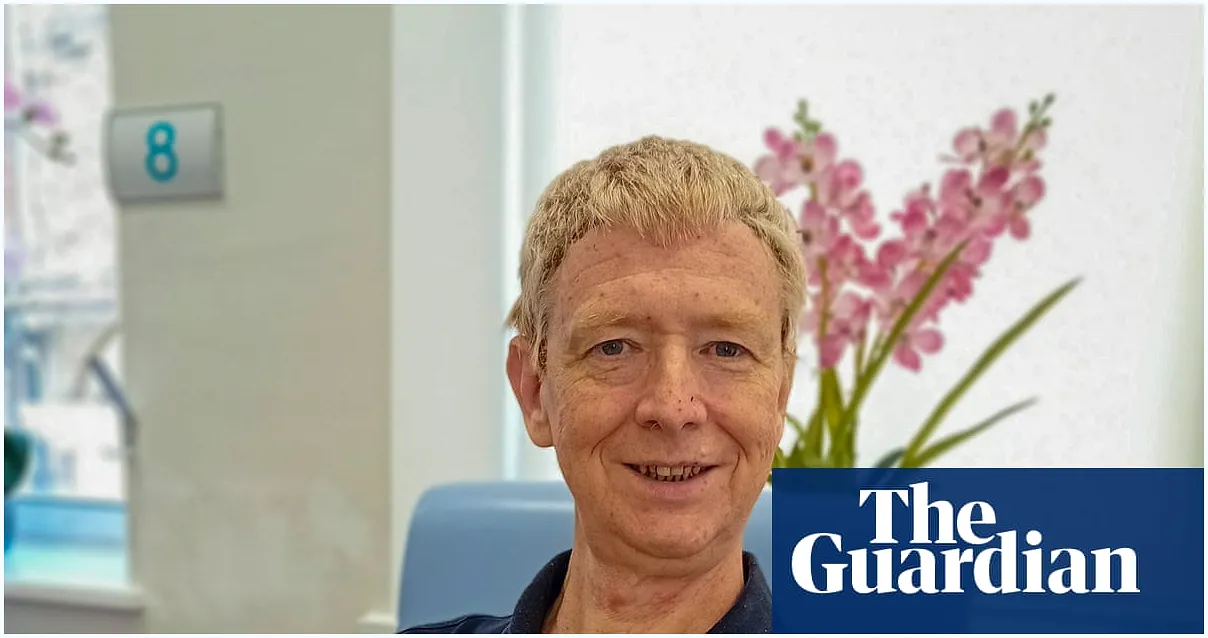
Carl Walsh, 56, embodies the trial’s profound impact. Diagnosed with tongue cancer, he endured unsuccessful chemotherapy and immunotherapy before joining the OrigAMI-4 trial at the Royal Marsden. “I’m now on my 17th cycle of treatment and I’m very pleased with the progress so far,” he states, a remarkable understatement considering his previous struggles.
The convenience is also notable. No grueling intravenous drips; just a quick jab every three weeks. This makes treatment far more accessible and less burdensome for patients and clinics alike. Side effects? Mostly mild to moderate. Fewer than one in ten patients discontinued treatment.
Walsh, from Birmingham, can now live a normal life. “Before starting the trial, I struggled to speak properly and found eating difficult because of the swelling and pain.” Today, his swelling is down, pain is minimal, and the debilitating side effects of previous treatments are a distant memory. He’s eating full meals, enjoying steak, and speaking without issue. A stark contrast to the soup and nutritional drinks that once defined his diet.
What’s more, the trial specifically targeted non-HPV positive oropharyngeal squamous cell carcinoma – a form of head and neck cancer notoriously harder to treat. Progress in this subgroup is therefore not just significant, it's monumental.
Patients receiving amivantamab lived for a median of 12.5 months, even with a cancer type typically associated with very poor prognoses once standard treatments fail. Professor Kristian Helin, CEO of the ICR, underscores this. “Achieving this level of tumour response and encouraging survival outcomes in such a challenging‑to‑treat group represents a significant step forward.”
This isn't a cure-all, not yet. But for patients with limited options, it's a powerful new weapon in the arsenal. And it begs the question: how many more 'unprecedented' breakthroughs are waiting just beyond the horizon?


No comments yet. Be the first to share your thoughts!