
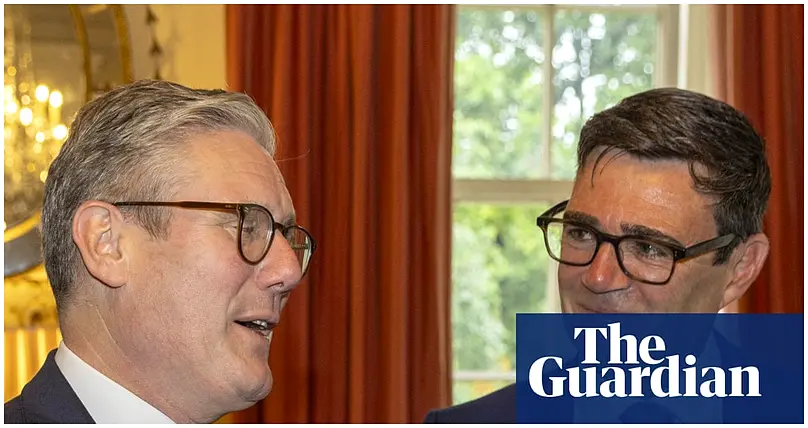
The British pound just endured its nastiest week in eighteen months. A freefall. City traders watched, aghast, as Westminster's simmering political drama boiled over. The culprit? Talk of a leadership challenge to Prime Minister Keir Starmer. And Manchester Mayor Andy Burnham's name was on everyone's lips.
Days of agonizing uncertainty. Sterling plunged, losing roughly three cents. A 2.2% drop, landing at a five-week nadir of $1.332. That's the deepest weekly dive against the dollar since Donald Trump's surprise win in November 2024. A stark comparison.
The currency bled value every single day. Leadership tensions. A tight grip on the capital. Then Burnham made his move, announcing a run for parliament in Makerfield, a north-west constituency. Suddenly, a direct challenge to Starmer for the top job seemed very real.
Kathleen Brooks, XTB's research director, didn't mince words. "The pound is weakening this morning after a sharp drop on Thursday, when Andy Burnham threw his hat into the ring." Her take? Burnham, she suggested, is "the least market-friendly of all the candidates." Wes Streeting's prior resignation? Not nearly the same market shudder.
The Cost of Ambition
This wasn't just about currency. UK government borrowing costs? They shot up. Part of a wider sell-off in sovereign debt, sure. US and German debt yields rose too. But Britain’s? Significantly more. A global surge in oil prices only amplified inflation fears, pouring gasoline on the fire.
The yield on UK 10-year bonds leaped to 5.18%. Unseen since 2008. Worse than the 18-year high set just days earlier, when pressure on Starmer mounted after local election results. Thirty-year bonds? A staggering 5.85%. Above a 28-year peak. A sudden 20-basis-point surge.
The City’s message was clear. A Burnham premiership risks loosening Britain's fiscal rules. More borrowing. Higher spending. Investors hadn't forgotten Burnham's past criticisms. In January, he famously declared the UK "in hock to the bond markets," trapped in a "low-growth doom-loop." He's since softened his tone. But markets remember.
Neil Wilson, investor strategist at Saxo UK, summed up the sentiment. Markets wouldn't exactly applaud a left-leaning Labour PM whose fiscal philosophy, and frankly, his views on the bond market itself, were already widely known.
"Ultimately the bond market is likely to impose fiscal discipline, but it can get messy before that happens. And the UK’s fiscal position gets increasingly fragile every day that the strait of Hormuz is shut."
A chilling assessment.
Mark Dowding of RBC BlueBay Asset Management delivered a blunt prognosis to his clients: Keir Starmer's tenure in Downing Street was "numbered." This backdrop, he warned, meant UK financial assets and sterling were "likely to be subjected to an elevated political risk premium for an extended period."
Yet, Burnham's path to a leadership challenge isn't a stroll. Weeks, at least. He needs to win a by-election. Makerfield isn't a guaranteed win; Reform UK performed well there recently. The Green party could spoil things. The outgoing MP, Josh Simons, stepping aside to clear Burnham's route, held a majority of just over 5,000 votes. A slim margin.
Bill Diviney, ABN Amro’s macro research head, predicts more volatility. Any hint of fiscal policy shifts would jolt gilt markets. He pointed to Burnham's public appeal. "Manchester mayor Andy Burnham is by far the most popular among the general public," Diviney noted. "In YouGov polling he is actually the only major politician in the UK with a net positive approval rating." Public popularity and market confidence? Two very different beasts.
One factor, Diviney suggested, might stabilize things: Rachel Reeves. Keeping her as Chancellor would signal continuity. A commitment to fiscal rules. Perhaps, just perhaps, keeping markets "relatively stable."
Stability. A precious commodity. And right now, in the high-stakes theatre of British politics and finance, it feels very, very scarce.

No comments yet. Be the first to share your thoughts!