
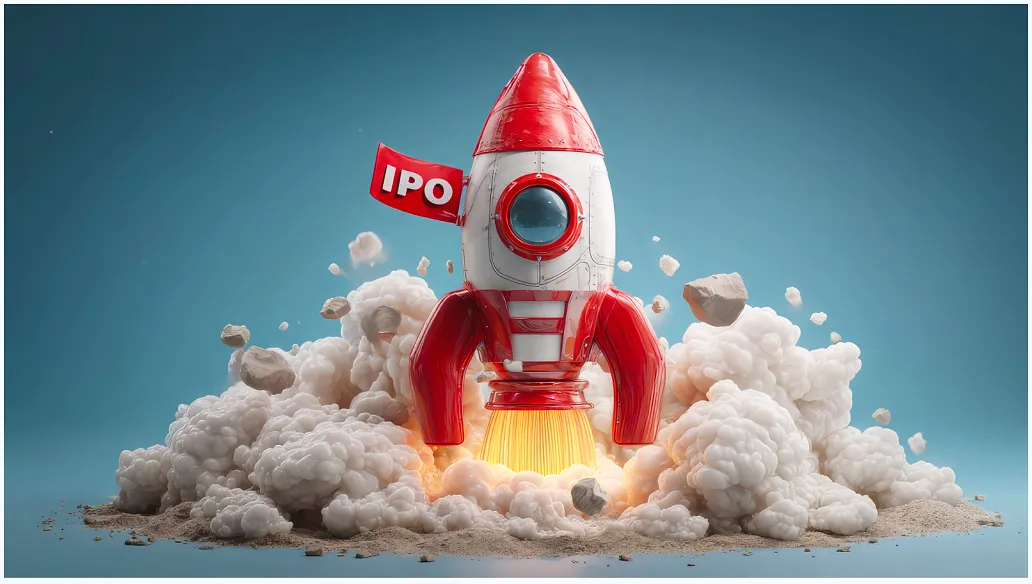
For well over a year, a select few have been quietly salivating over the prospect of diving into companies like SpaceX, OpenAI, and Anthropic. The dream? Overnight fortunes. That moment, it seems, is finally upon us.
But not so fast, cautions master trader Jonathan Rose. For prospective IPO buyers, a deep breath is in order. Extreme caution. Why?
Rose points to the stunning aftermath of the Figma IPO. A stock that initially soared, only to collapse more than 80% from its peak. The company itself wasn't the problem. Its IPO structure was.
He explains a smarter way to approach these high-stakes public offerings. How he, alongside market veteran Marc Chaikin, utilizes their 'Convergence Trigger' system. A method designed to uncover genuine trading opportunities long before the masses catch on.
Forget the breathless headlines. The reality of a 'hot' IPO is often far less glamorous for the everyday investor. A company everyone knows, its stock instantly doubles. Financial media froth at the mouth, dubbing it 'the next great technology platform.' Suddenly, it feels like everyone's getting rich. Except you.
That, precisely, is the moment investors are most exposed.
The Figma Blueprint: A Cautionary Tale
Consider Figma Inc. (FIG). Makers of design software, a name perhaps unfamiliar to you, but indispensable to creative and engineering teams worldwide. Adobe Inc. (ADBE) tried to acquire them for a cool $20 billion in 2022. Regulators, however, blocked the deal. Figma went public on its own. The buzz was immense. Exactly the kind of tech IPO that electrifies retail investors.
Here’s the rub.
Figma priced at $33, then blasted open at $115. Euphoria. What almost no one knew: a clause, buried deep in the lockup agreement, that rendered the standard six-month waiting period for insiders optional. A performance-based trigger. If the stock traded 25% above its IPO price for five consecutive days, the lockup would release early.
It opened 158% above that threshold. The trigger fired on Day 1. Just 36 days later, insiders — those who truly understood the architecture — were liquidating shares at $80. Eight months later, Figma was trading at $22. Down 81% from its peak, even below its IPO price.
Slowing revenue and AI competition certainly played a role. But that doesn't explain insiders dumping stock at $80 on Day 36 while retail was still piling in. The structure was engineered for their exit.
“When you’re buying at the open, you are not making a smart investment. You are providing ‘exit liquidity’ for people who got in a decade ago.”
They rigged it. That's the cold truth. And the same game is being prepped again. Only this time, the stakes are exponentially higher.
Cerebras Systems Inc. (CBRS) just went public at $185, opened at $350, then immediately shed 10%. SpaceX is next. Then Anthropic. OpenAI follows. These three giants alone represent a combined valuation topping $3 trillion. Every single one is virtually guaranteed to employ a variation of the same structural setup that tanked Figma from $115 to $22 in mere months.
These aren't inherently bad companies. Some may even become great. That misses the point. The structure is meticulously designed to allow early money to cash out, leaving later investors with the bag. Period.
Company insiders. Venture capitalists who bankrolled their rise. The mega-funds who secured their allocation at the offering price. If you don't grasp this structural reality, you'll be on the wrong side of the trade.
Navigating the IPO Minefield
Here’s how to approach the coming wave:
First: Do not buy at the open. An IPO's opening price reflects an intentional underpricing, creating an artificial supply-demand imbalance. That initial pop? It's a gift to insiders. By the time you hit 'buy,' that gift has already been delivered.
Second (and this is where most investors stumble): Invest in the 'family,' not the headline. Every major AI IPO in the pipeline has publicly traded proxies. Google's parent, Alphabet Inc. (GOOG), owns a piece of SpaceX. Amazon.com Inc. (AMZN) and Nvidia Corp. (NVDA) back Anthropic. Microsoft Corp. (MSFT) is tied to OpenAI.
Then there are the supply chain plays. The picks and shovels these behemoths depend on. These names are accessible. No lockup risk. No allocation issues. No inflated premiums built on a microscopic float.
Third: Track the lockup calendar. Once a company goes public, the critical dates aren't earnings reports. They're the lockup expirations. The most brutal declines often coincide with these windows. That's when insider selling floods the market, and the stock finally trades closer to its actual worth.
This is precisely the kind of systemic inefficiency Rose's scanner and Chaikin’s tools are built to exploit. Their 'Convergence Trigger' identifies where large, institutional bets are quietly materializing – in the supply chain, in the proxies – long before the crowd arrives. Marc’s Money Flow indicator then validates whether institutional capital is flowing in the same direction. When both signals align: that's the trigger.
With the largest AI IPO wave in history looming, the supply chain is already stirring. The 'family' stocks are already moving. The institutions, they know what's coming. They've already secured their allocations. They'll be the sellers on Day 1.
The real trade isn't waiting for the opening bell. It's happening now, away from the glaring headlines. The creative trader, the informed one, wins.
No comments yet. Be the first to share your thoughts!