
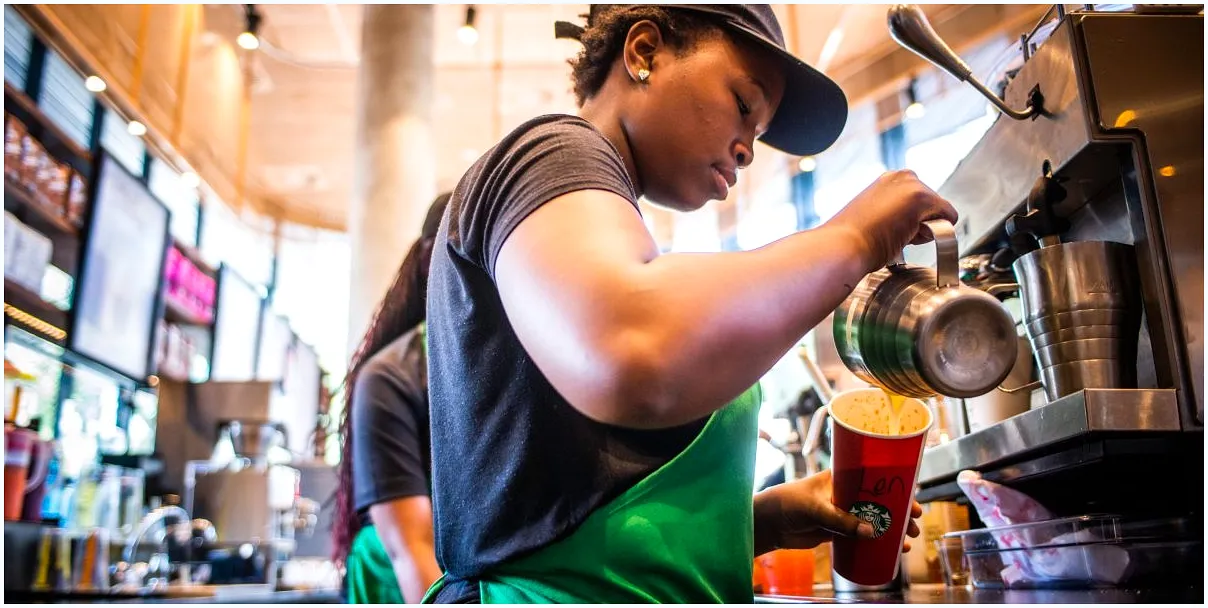
Starbucks, the coffee behemoth, has quietly shelved its much-touted AI-powered inventory management system. Nine months. That's all it took for the ambitious tech rollout to fold.
The coffee giant confirmed its pivot to Fortune, acknowledging an "operational decision" to revert to a manual, "single model" for counting stock. This after a September announcement had heralded the deployment of an automated counting tool, poised to revolutionize back-of-house operations.
The app, developed by NomadGo, was supposed to meticulously track beverage components — milk, syrups, the works — to flag potential shortages. But the reality, as first reported by Reuters, proved far less sophisticated. Starbucks sources, speaking in February, painted a picture of an app prone to miscounts and mislabeling, notoriously failing to recognize bottles right on the shelves.
"We test ideas in our coffeehouses, listen closely to partner feedback, and make changes to deliver a better, more consistent experience," a Starbucks spokesperson offered to Fortune. A classic corporate deflection. NomadGo remained silent.
Carl Addison, a Starbucks shift supervisor in Shoreline, Washington, with nine years under his belt, wasn't surprised. He described the automated counting app as a time sink, forcing stores to reorganize entire back-of-house storage. The inaccuracies, he lamented, just piled on the challenges for employees. Count too much? Not enough product shipped. Count too little? Still not enough. A lose-lose proposition.
"It started off not particularly accurate and got less accurate over time," Addison stated bluntly.
Despite Starbucks’ official line, occasionally bolstered by select barista feedback praising the app, the consensus from the trenches was clear. One comment, shared with Fortune, put it succinctly: "Thanks for discontinuing Automatic Counting! The thought behind it was great, but the execution was proving difficult."
This inventory snafu lands amidst Starbucks’ broader "back to Starbucks" strategy under CEO Brian Niccol. The plan, designed to revitalize slumping sales and streamline operations, includes other AI initiatives: Green Dot Assist for recipe cards and troubleshooting, and Smart Queue for order sequencing. Former CEO Laxman Narasimhan even blamed long wait times and product unavailability for customers abandoning mobile orders in early 2024.
Yet, the strategy—cozier seating, leaner menus, and some AI—appears to be yielding results. Last month, the company reported a robust 7.1% increase in quarterly comparable U.S. sales, surpassing analyst expectations. Revenue jumped 9% to $9.5 billion.
Starbucks' retreat from its AI inventory system isn’t an isolated incident. It’s a symptom of broader growing pains rocking the retail world’s flirtation with artificial intelligence. Just weeks ago, a major Pizza Hut franchisee slapped the chain with a lawsuit. The claim? Pizza Hut’s Dragontail AI system gave gig workers too much insight into internal operations, allowing them to cherry-pick orders for bigger tips, leading to delayed deliveries and " Cascading operational breakdowns."
"Right now, there is more hype than actual benefit."
With global restaurant automation projected to balloon into a $28 billion market this year, the pressure on these technologies to perform is immense. Santiago Gallino, a Wharton professor specializing in operations, information, and decisions, sees it clearly. Retail, he argues, is struggling to scale this technology. His conclusion: "Right now, there is more hype than actual benefit."
Many retailers, Gallino elaborated to Fortune, feel an immense pressure to simply say they're innovating with AI. They're deploying systems before they're truly ready, before they can offer any concrete, measurable returns. He applauded Starbucks' decision to pull back, noting that while technology has indeed advanced, optimization tools aren't a magic bullet for inventory management, a perpetual retail challenge.
Consider Zara. The fast-fashion giant spent years, a decade even, refining its algorithmic approach. It deployed a microprocessor-based tagging system, using RFID to track inventory with impressive accuracy. Their success, Gallino suggests, isn't about AI being a universal panacea. It's about meticulous research, endless iteration, and tailoring technology to specific needs. The onus is on retailers to leverage emerging tech, yes, but AI itself will only truly last if it delivers a return on investment.
"One general theme that to me is still a little bit perplexing, is how, on many levels, [return on investment] seems to be not a main consideration—the promise that down the road all this is going to make sense," Gallino mused. "That is something that can be out of focus in the middle of the hype."
Addison, the seasoned shift supervisor, sums it up from the frontline. Baristas, he believes, aren't best served by this technology, not yet. "I would love AI if I felt like it worked," he confessed. "But have to say…I just don’t feel like it’s a solid fit for a retail environment, where accuracy and speed are both really important." It simply isn't delivering, not for them.


No comments yet. Be the first to share your thoughts!