
Millions of recent graduates feel the squeeze. Ghosting runs rampant. Entry-level roles seem to vanish. And the specter of AI gobbling up jobs? That just adds to the dread. Yet, from the executive suites, a profoundly different narrative emerges. A contradictory one, perhaps.
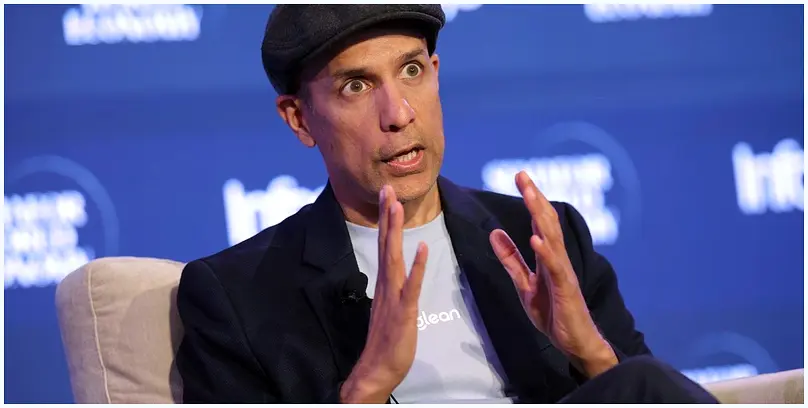
Take Arvind Jain, for instance. An ex-Google engineer, Rubrik co-founder, now helming the $7.2 billion AI startup, Glean. He's facing what he calls “the opposite problem.”
“Students think it’s hard to find jobs, but we think it’s hard to find them,” Jain recently confided to Fortune. Not for lack of applications, mind you. Glean gets thousands daily. The real bottleneck? Something far more elemental.
The Relentless Pursuit of Talent
What truly sets the handful apart, the ones who get a call back? It's not the Ivy League degree. Not the glittering skill set. Not even a CV thick with impressive internships. It’s raw, unadulterated work ethic.
“I have a firm belief that hard work solves all the problems,” Jain stated, unequivocal. “The yardstick for me is that when I work in a group, I want to be known as the person who gives in the most.” That, he argues, is the golden thread. It’s the quality that makes his team relentlessly pursue some candidates, while others never even get a second glance.
The catch? These driven individuals are a hot commodity. Always.
"If you work hard, you always have lots of choices. Every company wants to work with you."
The best talent, Jain observes, often finds five companies vying for their attention simultaneously. The problem isn't a dearth of applicants. It’s a profound shortage of commitment.
This isn't just Jain's mantra. It’s a consistent refrain from CEOs across industries. Success, they insist, isn't some cosmic stroke of luck. It's not even an expansive Rolodex. It's simply showing up and putting in the hours. And then some.
Consider David Solomon, CEO of Goldman Sachs. As a teenager, he balanced two part-time gigs – Baskin-Robbins and McDonald’s – alongside three sports and a full school schedule. Today, running a $291 billion investment bank, he still carves out time to DJ. He credits his father for instilling that drive, a lesson he imparts to a new generation entering what he terms “one of the most brutal job markets in history.”
Khozema Shipchandler, CEO of Twilio, the $30 billion cloud communications platform, tells a similar tale. He attributes his meteoric rise to a daily grind, from 4:30 a.m. to 9 p.m., even during his college years. By 31, he was CFO of a multi-billion-dollar GE division. Coincidence? “If you were willing to put in the effort, they were willing to give you the opportunity,” he noted. Opportunities, it seems, multiply with effort.
Shipchandler offers a stark caveat for those eyeing the C-suite. “If you want to work eight-to-five, coach your kids sports teams, have the evenings for yourself, and maybe another hobby or interest, that’s awesome.” But, he adds, he’s “never spoken to a peer” who doesn’t adhere to a similarly punishing schedule.
Even in the high-stakes world of professional sports, the message resonates. NBA champion Metta World Peace, then Ron Artest, learned this lesson firsthand. He once arrived at the gym at 8 a.m., thinking he was early. Only to find Kobe Bryant already showered, already done, on his way out. “He was all showered up. He was done,” World Peace recounted. “And I thought I was working hard.” The next day, 5:30 a.m. World Peace went back, just to witness the relentless pursuit of greatness.
The sobering takeaway? Performance is always relative. Someone, somewhere, is always putting in more. As World Peace put it, simply: “There’s always somebody out there working harder.”
Jain isn't blind to the structural headwinds facing today’s graduates. They are real. In the U.K. last year, over 1.2 million applications flooded in for fewer than 17,000 graduate roles. Americans report the lowest probability of finding a job in memory. One math graduate, after a year and over 1,000 applications in the U.K. yielding zero offers, decamped for Austria.
Automation and AI are indeed displacing entry-level positions. The scramble for what remains? Only intensifying. Even Glean, Jain's company, can sift through merely a fifth of the applications it receives. “We’re waiting for people to come to our website to apply,” Jain explains. “We don’t have the resources to go out there.” The onus, then, falls squarely on the applicant to become utterly indispensable.
Beyond the Brute Force: AI's New Mandate
His most pragmatic counsel? Master AI. Immediately.
“This is the time of opportunity,” he declares. “You have this phenomenal tool, and it allows you to do so many cool things.” A candidate fluent in AI, he predicts, can operate at ten times the speed of a technophobe. That gap will only widen. “If you’ve mastered these tools, you can create amazing software, systems, applications, imagery, videos. Show your creativity with it.”
The good news? Starting is simpler than many assume.
“AI is not a difficult thing.” No need for ten-hour courses. “Just go into one of these AI tools—whether you want to use Gemini or ChatGPT or whatever—and talk to them like a colleague. Ask them to do things for you.” This isn't niche advice. It applies across the board. “You can be the new age marketer or paralegal if you embrace AI in a big way.”
In a job market where the truly committed are scarce and technology reshapes everything, the old truism about hard work feels less like a cliché and more like a stark imperative. Or perhaps, the ultimate filter.


No comments yet. Be the first to share your thoughts!