
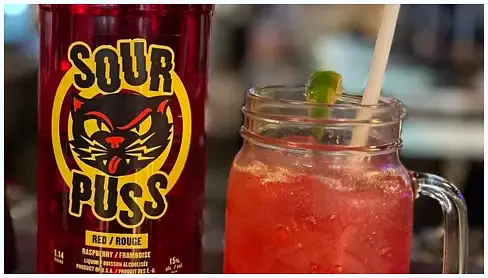
Stephanie Intrevado, 35, has a particular obsession. It's Sour Puss. The brightly colored, fruit-flavored liqueur. Since her first legal sip at 18 in Quebec, she's been on a mission: try every flavor. Passionfruit, coconut, watermelon – a prized collection, some hard-to-find bottles and even rare merch.
Then came the jolt. Sour Puss, that quintessential Canadian university staple, was actually American-made. A shock. And a problem. Her next bottle? Uncertain.
The source of her dilemma? A simmering trade war. Since Spring 2025, most Canadian provinces have been boycotting US-made liquor. It’s a direct response to then-President Donald Trump's tariffs against Canada. This boycott hit Phillips Distilling, the Minnesota-based, family-owned maker of Sour Puss, hard. A tight spot doesn't quite cover it.
The company lost 70% of its Canadian business. "A disaster," CEO Andy England called it. Sour Puss sales, particularly, plummeted. Canada, by far, its largest consumer, vanished overnight.
It forced an unprecedented move: shift some production north of the border. A desperate measure. It worked. Products are back on shelves across Canada. Recovery is indeed underway.
"We're in a different place now," England recently told the BBC. "We produce and sell in Canada."
US-based liquor producers have all felt the financial sting of this trade dispute. But Phillips Distilling stands out. It's one of the few to actually relocate production.
A comprehensive trade deal? Still out of reach. The US considers the liquor sales ban a major sticking point in ongoing negotiations. Meanwhile, Prime Minister Mark Carney has signaled provinces might end the alcohol ban if tariffs on critical Canadian sectors – automotives, metals, lumber – are eased or lifted.
Ontario initiated the boycott in March of last year. Its liquor board, one of the world's largest wholesale alcohol purchasers, had seen its automotive sector ravaged by Trump's tariffs. Quebec and British Columbia quickly followed. As of May 2026, only Alberta and Saskatchewan continue to sell American alcohol.
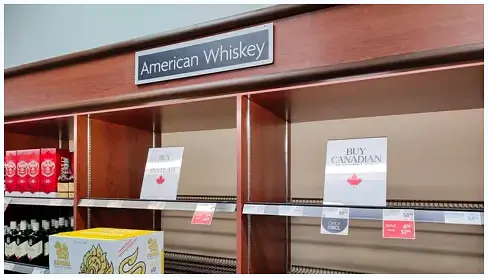
In Canada, provincial governments largely control alcohol sales. Their boards manage imports and distribution, wielding considerable power over market access. Alberta and Saskatchewan operate a fully privatized system, perhaps explaining their outlier status.
For Phillips Distilling, the boycott’s impact was immediate. Unsurprisingly. Sour Puss holds an almost mythical status in Canada. "If we sold 1,000 cases of Sour Puss in the US, I'd be surprised," England admitted. He sees it as "very much a Canadian brand."
Weeks after the provincial liquor boards slammed the door, Phillips began exploring Canadian production. By October, with no resolution in sight, the company signed a deal with Station 22, a Montreal-based alcohol manufacturer. Production began.
"It was a 'heat of the moment' response that brought an accidental positive—more production to Canada."
Canadian distributors were "excited" and "very appreciative." But getting products back on shelves wasn't instant. Quebec was the first to relent, paving the way for talks with other provinces.
Intrevado, naturally, celebrated on Instagram. "Guess who's back?" she captioned an image of four raspberry-flavored bottles. "Oh how I've missed you."
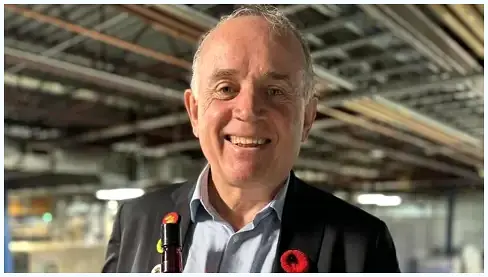
Both England and Meredith Lilly, a professor of international economic policy at Carleton University in Ottawa, highlight Phillips’ unique advantage. Unlike Kentucky bourbon or California wine, Sour Puss isn’t tied to a specific geographic origin. This makes shifting production significantly easier. Lilly also noted Phillips faced "no reputational penalty in the US" for such a move, given Canada represents such a large slice of its business.
Lilly characterizes the premiers' decision to ban US liquor as a "heat of the moment" response. It inadvertently yielded a positive outcome: increased production in Canada. "I don't think it was envisioned that [the boycott] would be in place as long as it has been," she mused.
Whether this boycott genuinely strengthens Canada's hand at the negotiating table remains ambiguous. US Commerce Secretary Howard Lutnick, for one, called it "outrageous," "insulting," and "disrespectful."
Lilly also points out a critical nuance: the ultimate decision to restock American alcohol rests with individual provinces, not the federal Carney government. This makes it an unpredictable bargaining chip at best.
Canada's federal government has retaliated against US liquor before. During Trump's initial term, former Prime Minister Justin Trudeau imposed tariffs on Kentucky bourbon to pressure Republican states after steel levies hit Canada. Those tariffs were lifted in less than a year, after a deal. This time, however, the dispute lingers. The two sides appear no closer to an agreement. For England, the long-term implications are already set. The last year forced his company to fundamentally rethink its business model, likely for good. The global chess match continues, transforming industries in its wake.
No comments yet. Be the first to share your thoughts!