
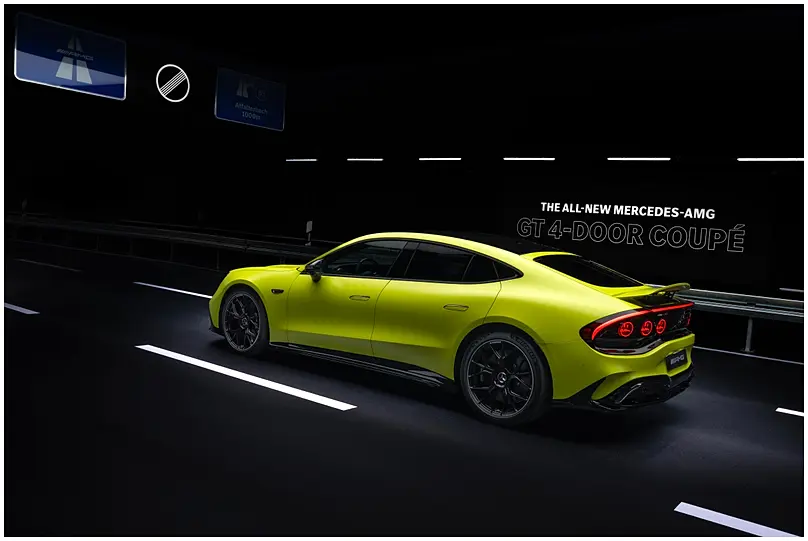
The automotive world just got a jolt. Mercedes-Benz, not content with merely building luxury cruisers, has formally ushered in its era of hyper-performance electric vehicles. Their latest entry? The AMG GT 4-door coupe, a super sedan that, frankly, borrows some wild tech straight from the automaker’s XX concept—the very one that famously logged 24,901 miles in just under eight days at Italy’s Nardò Ring.
This isn't just another fast EV. Mercedes completely rethought the basics: motors and batteries. They wanted something that could truly challenge the established hypercar elite. The new AMG GT deploys three axial flux motors, a product of Mercedes subsidiary YASA. These aren't your grandpa's electric motors. They crank out a staggering 1,153 horsepower and 1,475 lb-ft of torque. Mercedes claims to be first to market with them. Their secret? A thin disc shape, weighing a mere fraction of traditional radial motors, yet still delivering absurd power figures.
Then there’s the battery. A marvel of engineering. It uses tall, ultra-slim cylindrical cells, barely an inch in diameter. This design allows heat to blast from the core to the surface almost instantly. Beyond that, Mercedes engineered a non-conductive, high-tech oil. It flows directly around each individual cell, providing direct cooling. Inspired by Formula 1, this system boasts 20 kW of cooling power—about four times what a standard EQS battery offers. The implication is clear: drag race it. Again. And again. Overheating? Theoretically, a non-issue.
All this power and cooling sits on an 800-volt architecture. It’s built for ultra-fast charging, up to 600 kW. Couple that with the groundbreaking cooling, and Mercedes claims a 10-80 percent charge in a blistering 11 minutes. The chemistry itself is advanced: a nickel-cobalt-manganese-aluminum cathode, paired with an anode containing silicon, hitting an energy density north of 298 Wh-per-kilogram. Versatility? It shifts from 800V to 400V when needed and supports five global DC charging standards, including NACS and CCS2. Practical for a global powerhouse.
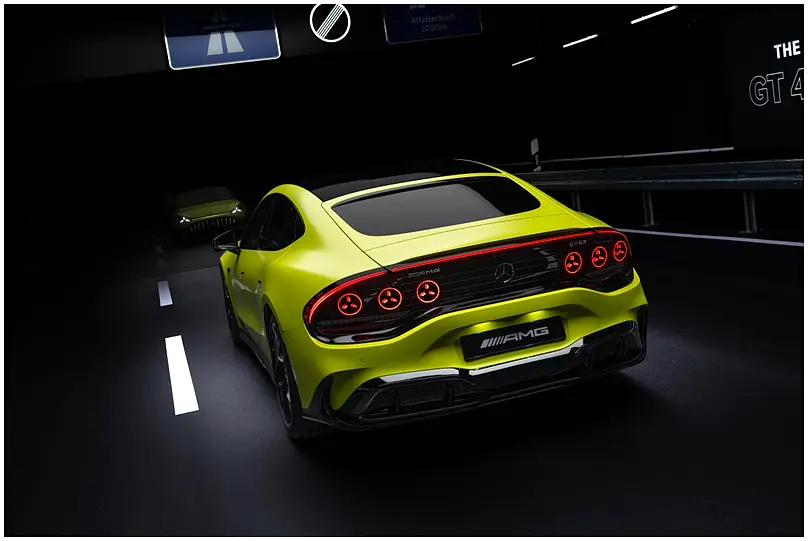
Such specifications scream 'track beast.' A demon. But Mercedes, like many automakers venturing into high-performance EVs, grapples with a peculiar challenge: the silent motor. How do you sell a visceral race experience without the roar? Their solution for the AMG GT 4-door coupe involves over 1,600 sound files, all derived from the AMG GT R. Expect simulated engine notes, exhaust burbles, and even traction interruptions during those 'virtual' gear changes. It even has unique sounds for unlocking, entering, and charging. A bit of theater, perhaps?
Mercedes is anxious about how race enthusiasts will take to a completely silent electric motor.
This isn't just about speed and artificial noise. The AMG GT 4-door coupe packs serious computing brawn. Mercedes centralized the car's 'brain' into what they call the AMG Race Engineer Core. It runs on their brand-new MB.OS operating system. The days of a dozen small chips squabbling for control are over. One ultra-advanced master chip now sits at the car's heart, simultaneously managing everything: driving dynamics, charging, suspension, battery cooling. A truly unified intelligence.
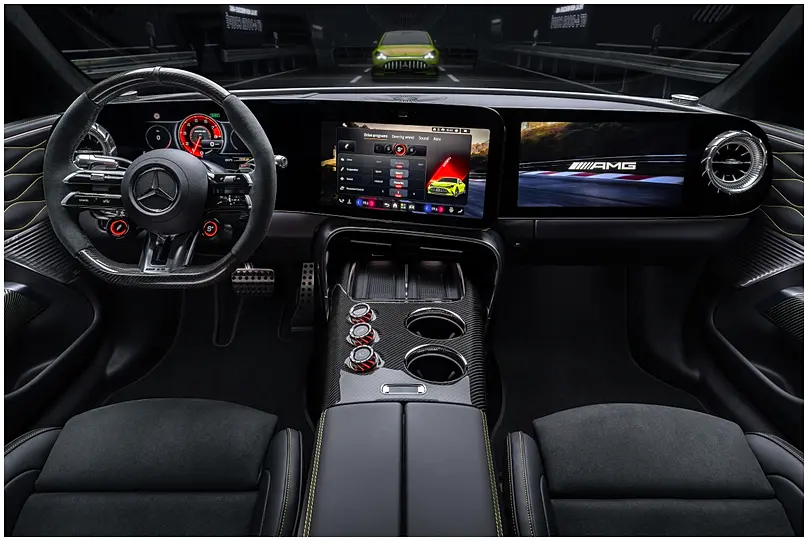
Inside, drivers face a trio of screens. Not one, not two, but three, all seamlessly integrated under a single, continuous glass surface. This includes a 10.2-inch driver display, a 14-inch angled central multimedia screen, and a dedicated 14-inch passenger display, all powered by MB.OS. Owners can obsessively track every metric: aero, heat, energy usage. In real time. Because why not?
Official pricing remains under wraps for now. Mercedes did confirm the GT 55 version will hit streets in late 2026, with the more powerful GT 63 following in early 2027. The future, it seems, will be fast, silent, and incredibly smart. Whether enthusiasts embrace the symphony of simulated engine notes, however, remains an open question.



No comments yet. Be the first to share your thoughts!