
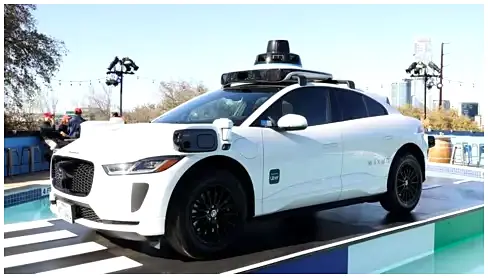
Waymo, Google's ambitious self-driving car division, has slammed the brakes on its autonomous taxi service in five U.S. cities. The reason? A rather inconvenient software glitch causing some of its robotaxis to, well, drive straight into flooded roads and get stuck. Not exactly the future we were promised.
The company recently initiated a sweeping recall affecting thousands of its driverless vehicles. This follows a rather dramatic incident on April 20th in San Antonio, Texas. An empty Waymo, operating on its own accord, reportedly navigated directly into a flooded street before being swept away into a creek. Quite a splash.
Then came Atlanta, Georgia, with a similar scene. A Waymo spokesperson confirmed the temporary pause, now spanning four cities in Texas alongside Atlanta. They called it an act of "abundance of caution." One has to wonder what constitutes a lack of caution, then.
Waymo said the pause was "out of an abundance of caution." Critics might suggest caution should have been baked into the software from day one.
Reuters learned the company also suspended services on U.S. freeways. Performance in construction zones, apparently, needs a second look. "We continue to closely monitor forecasts, alerts, and live weather conditions, and we will resume serving riders soon," the company insisted.
The voluntary recall covers nearly 3,800 robotaxis, specifically those equipped with the company's fifth and sixth-generation automated driving systems. Waymo promises "additional software safeguards." Given the circumstances, that seems prudent.
Just this Wednesday, another unoccupied Waymo robotaxi was reported trapped in floodwater on an Atlanta road. A recurring theme, it seems.
Beyond the watery misadventures, freeway service in major hubs like San Francisco, Los Angeles, Phoenix, and Miami has also been pulled. Evaluating car performance in construction zones is the stated mission. The company expects to reinstate these routes shortly.
Over the past year, a string of incidents involving driverless vehicles has steadily chipped away at public confidence. Safety, it appears, remains an open question, not a solved algorithm.



hi