
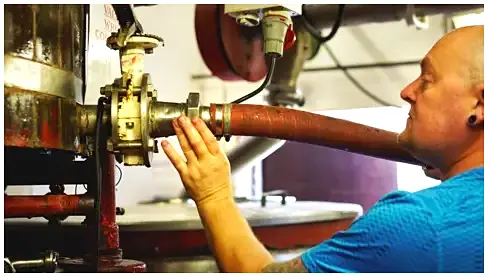
Thirty years ago, strolling through Burton-upon-Trent was a sensory journey. The air, thick with the malty promise of brewing beer, told a story of industrial might. Today? That aroma is largely a ghost, a whisper of a bygone era.
Al Wall, head brewer at one of the town's last major independent operations, remembers it vividly. Burton once churned out a quarter of all British beer. Over 30 breweries thrived here. Now, only a handful remain. And Burton isn't an anomaly. Across the United Kingdom, the brewing industry is in a precipitous retreat. Last year alone, 320 businesses shuttered their doors, Companies House data confirms. Just 170 new ones emerged. A net loss of 150. This trend persists. By April, the total number of UK brewing companies dipped to 2,320, down from a 2022 peak of 2,594. The frothy head is quickly dissipating.
Tim Webb from the Campaign for Real Ale (CAMRA) points an accusatory finger. Big brands, he says, are strangling the market. 'The big problem that breweries have got, and it is getting worse, is access to market,' Webb states bluntly. 'Large brewery companies owning the draught lines in pubs'—it’s a chokehold, happening across Europe. Smaller operations? They’re locked out of supermarket shelves, outmaneuvered by predatory pricing. Covid’s long shadow certainly played a part in some closures. But consumer preferences shifted, too. Less than a decade ago, England's beer scene was booming. 2017 saw 317 new breweries incorporated. A stark contrast to last year's meager showing. While England still dominates the UK's brewing landscape numerically, its total count just slipped below 2,000 this year. The lowest since 2018. Of the 1,965 left standing, 95 are already in the grim process of administration, insolvency, or liquidation. A sobering statistic.
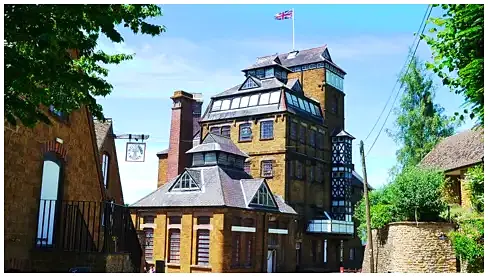
James Clarke, fifth-generation custodian of Hook Norton, the South East’s oldest brewery, has witnessed this transformation firsthand. He’s been brewing for three decades. 'Consumption, attitudes, and lifestyle'—everything has changed. 'Back in the early nineties, we brewed three beers,' he recalls. 'A mild, a bitter and Old Hooky.' Beer consumption in the UK? Roughly double what it is today. Hook Norton now brews half the volume it did 15 years ago. Yet, paradoxically, it offers a wider array of options. Clarke even detects a 'small renaissance in the traditional styles of beer.' Webb concurs: the 'interesting part' of the beer market, he notes, is the one holding its own, or even growing. Think heritage beers. Craft beers. Even the 'very strange wacky new types.' These niche offerings are thriving. What’s contracting? The 'bright, shiny, frothy top, see-through lager market.' That’s been in decline for decades.
For survivors like Hook Norton, diversification isn’t an option. It’s the playbook. 'We were probably the first with a visitor centre of any scale and we were one of the first with a microbrewery within the main brewery,' Clarke explains. Andy Slee, chief executive of the Society of Independent Brewers and Associates (Siba), echoes this sentiment. Many members are pivoting, opening taprooms, selling directly. 'In order to survive, you just can't stay doing what you were doing before,' Slee asserts. He’s right. Independent beer demand remains surprisingly robust, even as the overall market shrinks. But brewers face a 'suffocating level of taxation.' Siba advocates for a tax cut on draught beer. Slee paints a stark picture of the broader cost:
When a brewery or a pub dies, something in that community dies. A place to meet, a place of employment, a place that pays local tax.
Only London, perhaps buffered by its sheer economic scale, dodged a net loss of companies last year. The West Midlands, once brewing's heartland, saw 21 dissolve against just nine startups. A brutal loss of 12.
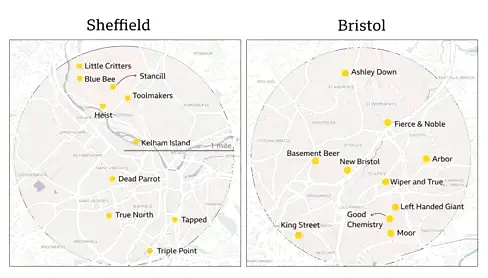
Back in Burton, Al Wall and Emma Cole, brewery manager at Burton Bridge and Heritage Brewing Company, fight for more than just profit. They fight to preserve history. To be a 'bastion of independence.' Cole frames it simply: 'It is about hope. People see us carrying on and it gives hope that beer isn't going to die in Burton.' Their survival hinges on taproom sales. So many pubs are simply off-limits. Rising costs—business rates, 'astronomical' fuel prices—pile on. Consumers, however, expect prices to hold. Burton-upon-Trent, once home to 30 breweries, now counts eight. A far cry from its glory days, yet still a dense cluster by UK standards. Sheffield, for instance, boasts ten within a single mile radius. George Brook, co-founder of Triple Point Brewery there, attributes his city's health to a local culture that embraces independents. 'The culture of drinking local beer is one of the things that makes Sheffield great.' His brewery has seen annual growth. But it’s a grind. 'We just accept that it's going to be harder next year to make the same amount of money as we did the year before,' Brook admits. The taproom is their lifeline. 'If someone came and shut down our taproom tomorrow, we would be in a serious pickle.'
Yet, a glimmer. The government has reviewed the beer market, aiming to 'determine barriers preventing small breweries from accessing pubs.' A £4.3 billion business rates support package also launched. 'We know the vital role independent breweries and pubs play in local communities, supporting jobs and growth across the UK,' a spokesperson declared. Lofty words. But for Britain’s struggling brewers, words alone won't keep the lights on, or the fermentation tanks bubbling. The question remains: can this once-mighty industry truly find its new flavor, or will its rich history simply sour?


No comments yet. Be the first to share your thoughts!