
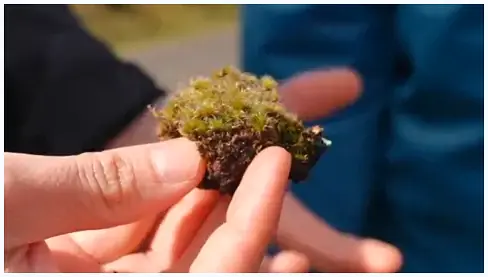
A silent, unseen battle unfolds across Britain’s delicate ecosystems. But hope, surprisingly, now sprouts from an unlikely champion: a newly identified “killer fungus.” This microscopic marvel is turning the tide against an aggressively invasive plant, the heath-star moss, potentially restoring decimated native habitats.
This isn't some sci-fi plot. It's happening. The fungus specifically targets and destroys the heath-star moss, a pervasive invader that chokes out Britain’s indigenous species. Scientists are buzzing, calling it a rare, organic counter-strike by the environment itself.
Dr. George Greiff, 30, a scientist meticulously tracking the fungus’s spread, witnessed its eerie “fairy rings of death” firsthand in south Wales. His journey began four years ago, a casual walk on the Isle of Wight.
He spotted dead mosses on a cliff. Intrigued, he took samples. The cause remained a mystery.

Yet, more cases of decaying moss kept appearing. Working tirelessly with colleagues in the UK and France, Greiff finally pieced together the microbial puzzle. The culprit? A previously unknown, potent fungus. Now, it bears a fitting name: moss die-back.
Fungus often gets a bad rap. Not this one. This, Greiff suggests, is a “goodie.” Its victim, the heath-star moss, is practically ubiquitous. Hillsides. Sand dunes. Your garden fence. “It’s aggressive,” Greiff states, a hint of weariness in his voice. “I’ve even seen it growing in tarmac.”
“It is a pretty-looking thing,” he concedes, plucking fragments from a green carpet. “But it’s caused a lot of problems.” Indeed. Around 2,000 non-native plants and animals have, over centuries, been introduced to Britain. Some, whether accidentally or deliberately, have simply taken over.
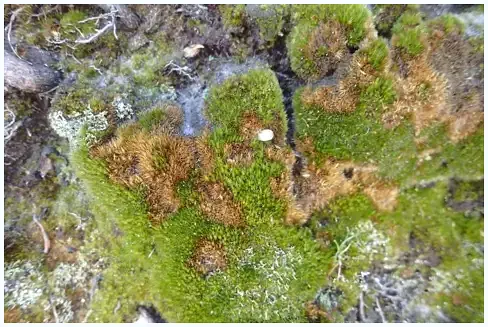
Think grey squirrels, decimating native red squirrel populations. Or Japanese knotweed, tearing through foundations. Rhododendron, poisoning soils. But the heath-star moss? Less understood. Scientists believe it arrived from the southern hemisphere in the 1940s. By 1990, it was everywhere.
“This moss has just exploded. In the 1930s, native mosses would have been growing here instead,” Greiff explains.
Britain boasts over a thousand moss types. They’re the unassuming backbone of precious habitats: rare temperate rainforests, vital peatlands storing carbon. Non-native plants pose a serious threat. Heath-star moss, with its rapid reproduction and far-flung spores, is a champion invader.
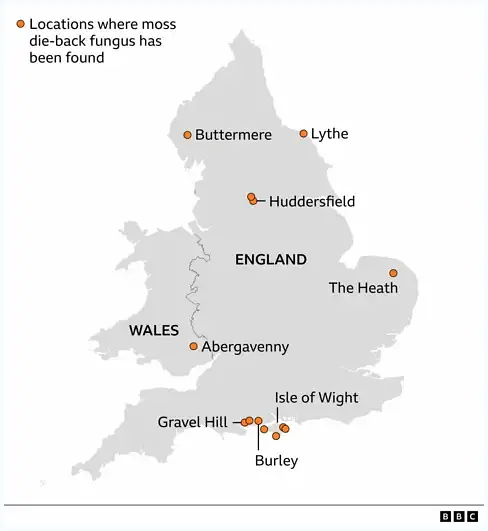
Greiff, who works at Amgueddfa Cymru museum in Cardiff, recalls his first encounter. “The first time I saw it, I had no idea what it was. I threw it in the bin.” Now, he guides me along a path in Bannau Brycheiniog national park, near Abergavenny, south Wales.
“In heathlands like this one, native mosses have gone locally extinct or reduced significantly in their populations,” he says, his eyes scanning the low banks for those tell-tale “patches of death.” His quiet, careful observation, focused on plants no taller than our ankles, is remarkable.
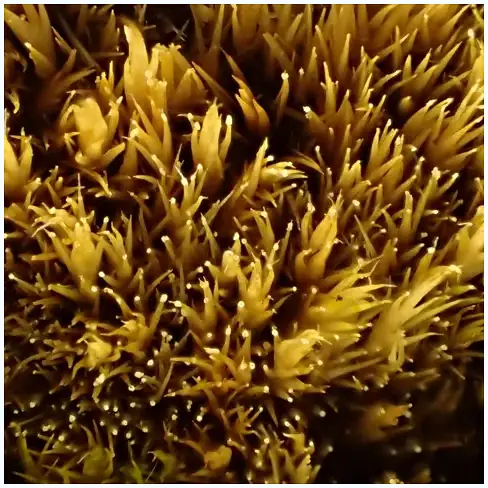
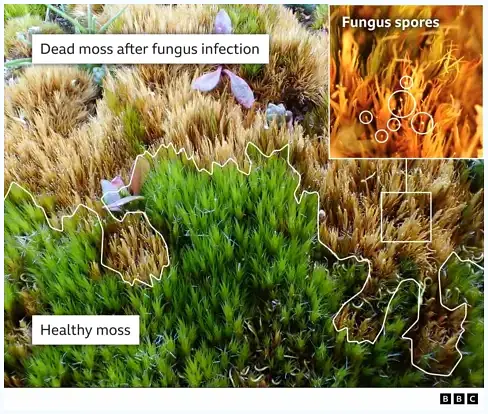
A few meters in, he finds it. “It’s as big as my hand,” Greiff says, fingers spread over a brown ring of dead moss. Less dramatic than expected, perhaps. But through our cameraman’s macro lens, white blobs shimmer on the moss tips. The fungus, busy at work.
Greiff points out tiny heather plants. They are growing in the gaps left by the decayed moss. A small victory, visible proof of change. Now, armed with knowledge, Greiff hunts for the helpful fungus wherever he goes. He jokes his holiday map is also a fungus map.
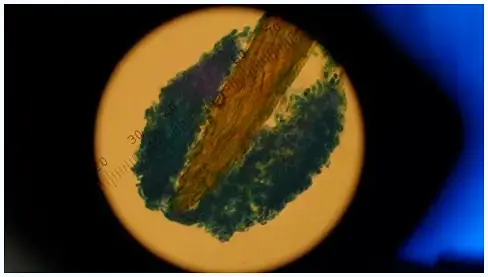
“It’s taken a lot of DNA sequencing to fully identify this fungus,” he states, demonstrating dead moss under a lab microscope at Amgueddfa Cymru museum.
The fungus clings to the moss stem, ballooning like candy floss. It’s even penetrated the moss cells. Intriguingly, it’s a close relative of the ash die-back fungus, which has killed up to 80 million ash trees in Britain.
A powerful fungus destroying plants. This sounds like a potential threat to other species, to biodiversity itself. But Greiff’s analysis, so far, is reassuring. It appears to affect only heath-star moss, and to a limited extent, one other moss type. More research, naturally, is needed to confirm this specificity.
To have a natural biological control agent doing it for us is really valuable.
He theorizes the fungus may have originated from a native species, one that shrewdly adapted to target the invasive heath-star moss. This could be a truly rare instance of the British environment finding its own defense.
Typically, humans intervene to control invasive species. Think grey squirrels on contraceptives. Greiff shrugs at manual removal. “Some people might try to collect this moss to try and get rid of it, but it’s not very effective. It would be very resource-intensive, very expensive.”
Dr. Nathan Smith, the museum's Head of Plant and Earth Science, pulls open cabinet drawers. They hold Britain’s oldest moss collection. Dried specimens in paper envelopes, some from the 1880s. Scientists will scrutinize these historical samples, hoping to pinpoint exactly when and how this “moss die-back” fungus emerged.
“This fungus gives an opportunity to save these unique moss landscapes that are homes for insects, fungi, molluscs, other plants,” Smith explains. “It gives a real chance to preserve and present their uniqueness and beauty.”
Mosses represent just a fraction of Britain’s intricate biodiversity. With one in six species at risk of extinction, and British nature among the most depleted globally, discovering a natural control for habitat destruction offers a potent dose of hope. “It’s exciting in so many respects,” Greiff muses. “Though I am the only one looking for the fungus. It would be nice if some other people did too.”

No comments yet. Be the first to share your thoughts!