
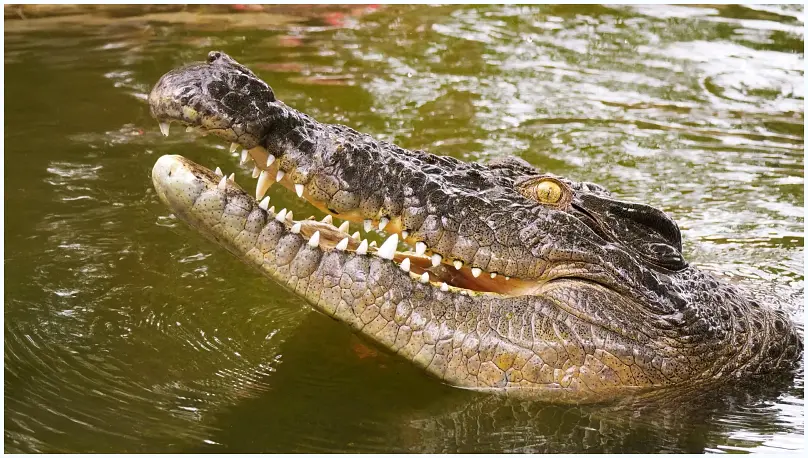
For centuries, a peculiar ghost haunted the shores of the Seychelles. Early explorers spun tales of formidable crocodiles, a common sight. Then, silence. With the arrival of permanent settlers in 1770, those tales faded fast. Within roughly half a century, they were gone. Utterly, irrevocably wiped out.
Now, a team of sharp-eyed scientists, armed with genetic tools, has finally cracked the cold case. The truth? Not some exotic, long-lost species, as many once theorized. Instead, the vanished Seychelles behemoths were none other than the saltwater crocodile (Crocodylus porosus). The world's largest living reptile. An ocean-traveling titan.
The Long Journey Revealed
Researchers from Germany and the Seychelles didn't just guess. They went deep. Comparing modern crocodile DNA with ancient museum specimens, they unraveled the evolutionary thread. Rare samples from those long-gone Seychelles populations proved invaluable.
This genetic blueprint didn't just confirm an old hunch based on scales and snout length. It painted a definitive picture: these island reptiles were intimately linked to saltwater crocodiles living thousands of kilometers away.
Only one crocodile could manage such an odyssey. The saltwater croc. A master of the high seas. Its secret? Specialized salt glands. Tiny biological marvels that purge excess salt, allowing these reptiles to thrive in saltwater for astonishing stretches. It's how they conquered oceans. And spread their formidable presence across continents, and countless remote islands.
"The founders of the Seychelles population must have drifted at least 3,000 kilometers across the Indian Ocean to reach the remote archipelago, perhaps even much further," observed reptile expert Frank Glaw of the Bavarian State Collections of Natural History, a senior author on the pivotal study.
Scientists suggest generations of these colossal creatures rode the currents, a slow, inexorable march across open water. Until they found a new home. A temporary reprieve.
This study doesn't just solve a local mystery. It highlights the staggering mobility of Crocodylus porosus. "Genetic patterns clearly indicate continuous connectivity across vast distances, cementing this species' reputation as a true global wanderer," notes Stefanie Agne, lead author from the University of Potsdam.
Today, the saltwater crocodile remains one of Earth's most widespread reptiles. But before humans intervened in the Seychelles, its dominion was even grander. Stretching over 12,000 kilometers. From Vanuatu to the very shores of those fateful Indian Ocean islands. One wonders what other biological histories we've erased, before even bothering to read their final chapter.


No comments yet. Be the first to share your thoughts!