
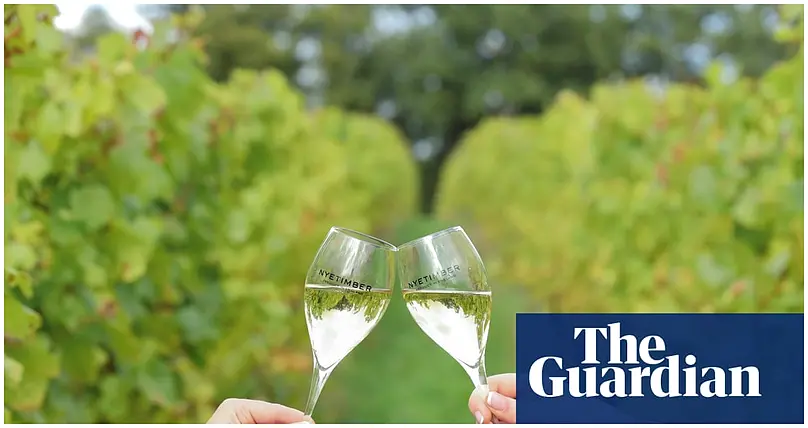
Forget the old world. Forget traditional vineyards. English wines, once a quiet footnote in the global enology conversation, have just roared onto the scene, securing an unprecedented number of gold medals at the International Wine Challenge. It’s a seismic shift, one leaving experts astonished and competitors perhaps a little unsettled.
The numbers don't lie. A mere 10 gold medals in 2025. This year? A staggering 25. A quarter-century haul, proving this isn't some fleeting trend. This is a legitimate ascent.
Sam Caporn, a seasoned master of wine, points to age. Not hers, but the vines themselves. “For many of the top producers, the vines are getting older, which leads to greater quality,” Caporn notes. “Nyetimber’s first vintage, for example, was in 1992. That’s over 30 years ago now.” Maturity. Patience. It pays off.
Then there's the art of waiting. Caporn adds, “There is also the possibility of increased bottle age – Wiston, for example, won a trophy for their Cuvee 2009 Magnum, and reserve wines are also taking on more complexity with every year that goes by.” Some things simply get better with time. Wine is certainly one of them.
Climate change, surprisingly, offers a curious, albeit complex, boon. Warmer days. More sun. Especially in the south of England. A paradox, perhaps, given the broader threats to food crops, but for viticulture, it appears to be a favorable tilt.
“The improvement in English wine over the past decade has been remarkable. English wines are being judged alongside the world’s best and are winning on quality alone.”
Oz Clarke, co-chair of the IWC, doesn't mince words. “The improvement in English wine over the past decade has been remarkable,” he declares. Growers understand their soil. Winemaking has become precise. Confidence abounds, particularly for sparkling wines. Clarke's summation is sharp: “The results at this year’s International Wine Challenge show just how far things have come: English wines are being judged alongside the world’s best and are winning on quality alone. It’s very exciting to see.”
Newer blood helps, too. Caporn stresses the learning curve from predecessors. Understanding microclimates. Soil composition. Leveraging diverse clones and rootstocks for sophisticated blending. An exciting moment, indeed. Even newer regions, like Essex’s Crouch Valley, are making waves, pushing still wines into the spotlight, not just the celebrated bubbles.
And who benefits? Everyone. Even the everyday shopper. Bargain bottles from Aldi, Tesco, Marks & Spencer, and Sainsbury’s snagged gold medals. The democratization of excellence.
While France still reigns supreme in overall country rankings, England's performance is a silent coup. Ninth place overall. But here’s the kicker: England secured more gold medals as a percentage of its entries than any other nation. Sixteen percent. That’s efficiency. That's a statement.
Kent led the charge domestically, claiming 12 gold medals, largely thanks to its sparkling wine and Chardonnay. The judges' verdict is clear: England is a “world-class wine producing country.” The established titans—France with its Champagne, Spain with its Sherry, Portugal with its Port—still hold their ground. But the quiet contenders, the English upstarts, are no longer just knocking. They’re kicking the door in. The future, it seems, tastes rather British.



No comments yet. Be the first to share your thoughts!