
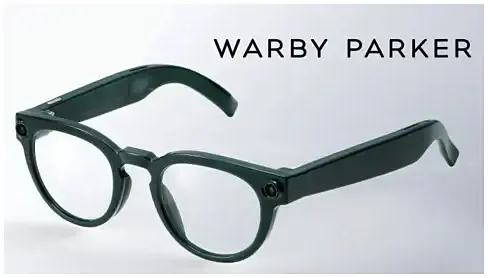
Google. Again. A decade after its much-hyped, then much-maligned, Google Glass project vanished from public view, the tech behemoth is preparing a fresh assault on the smart eyewear market.
This autumn, new smart glasses from the Mountain View giant are set to debut. These aren't the clunky, screen-obtrusive spectacles of yesteryear. Instead, Google's latest iteration boasts a subtle camera embedded in the frames and small speakers tucked into the arms. The intent? To let Google's advanced AI, Gemini, whisper sweet nothings—or perhaps, crucial information—directly into a user's ear. No display, at least not initially.
The company unveiled the designs at its annual developer conference, showcasing styles co-created with fashion-forward names like Warby Parker and Gentle Monster. A clear attempt to sidestep the original Glass's notorious aesthetic missteps, which often made wearers look less like innovators and more like extras from a B-grade sci-fi flick.
Google Glass, launched in 2013, was a spectacular failure. It was pulled in 2015, barely seven months after its UK release, drowned by a tidal wave of privacy concerns and an eye-watering price tag. The public, it seemed, wasn't ready to be constantly filmed by strangers with peculiar eyewear.
Shahram Izadi, a Google executive, pitched the new glasses as a way to “stay hands free and heads up.” They’ll play nice with both Android and Apple devices. Good. Cross-platform compatibility is a must.
Izadi emphasized the audio-first approach: “They are designed to give you all-day help with Gemini that’s spoken into your ear privately rather than shown on a display.” A smart pivot, perhaps, to temper immediate privacy qualms.
But the ghost of Glass still haunts. Google admits a version with an actual in-lens display is in the works, though no release date has been set. Developers, Izadi noted, are already building applications for these future, more visually integrated glasses. This suggests the audio-only approach might be a temporary truce, not a permanent paradigm shift.
Meanwhile, the market isn't empty. Meta’s AI-powered Ray-Ban smart glasses offer similar camera and speaker capabilities, and they’ve reportedly moved seven million pairs. A significant number. Yet, they too face the very same privacy maelstrom that sunk Google Glass.
People are being unwittingly filmed in public and in private, often by people wearing Meta's glasses, and only finding out when the videos show up online.
Snap is gearing up for its own new smart glasses this year, and whispers from Cupertino suggest Apple is also toying with eyewear. The tech giants are clearly betting big on this "next modality" after the smartphone. Investor Christine Tsai of 500 Global, an early-stage venture capital firm, sees it as a positive for both consumers and burgeoning startups.
“It’s good for consumers. And it’s good for early stage start ups, where we tend to invest, because they’re a platform where people can build more capabilities,” Tsai commented, attending Google's conference.
Developer Anil Shah, crafting an events management app called tixfix.ai, highlighted the potential for seamless integration with Google's existing services—Maps, Voice. “Being able to just talk with the smart glasses without opening the app would be a very nice integration,” he mused.
The promise of convenience is undeniable. But as Google dons its smart spectacles once more, one question looms large: Will consumers finally embrace always-on cameras on their faces, or will privacy concerns, once again, prove too heavy a burden for innovation to bear?


No comments yet. Be the first to share your thoughts!