
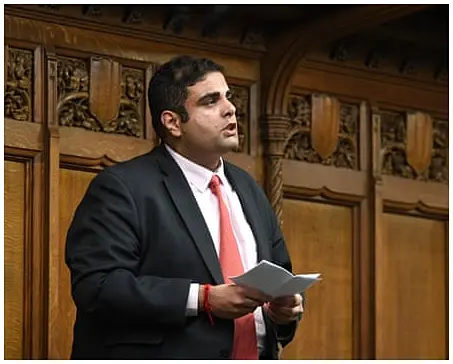
Britain’s mutual banking giant, Nationwide, finds itself under an uncomfortable spotlight. A prominent Labour MP, Navendu Mishra, is challenging the very bedrock of its identity: member ownership. He’s not alone. Concerns are mounting across the entire building society sector, questioning whether soaring growth has come at the expense of democratic principles.
Mishra, representing Stockport, fired off a formal letter to Nationwide chair Kevin Parry. His message? Growing unease. Executives, Nationwide’s included, seem to be—how to put it politely?—less than fully engaged with the actual owners of their institutions: the members.
This isn't just internal grumbling. A similar missive recently landed on Chancellor Rachel Reeves' desk. While the Labour government champions mutual sector growth, aiming to double its size, critics whisper that some societies, Nationwide among them, are letting their democratic values quietly erode.
“Their growth is exponential, which is fantastic,” Mishra acknowledged, noting Nationwide’s staggering £382 billion in assets following the Virgin Money acquisition. Then came the sting: “But obviously, we need to make sure that if Nationwide are always going on and on about how they are mutually owned … then we need to see that democracy.” See it, indeed.
The 'Quick Vote' Quandary and Boardroom Access
Mishra’s letter landed just weeks before Nationwide’s own annual general meeting (AGM). This year, for the first time this century, a member-nominated candidate will actually stand for boardroom election. A rare sight, he implies, across a sector ostensibly built on member-power.
The MP raised pointed questions about the ubiquitous “quick vote” options. Critics contend these convenient one-click mechanisms subtly nudge members to rubber-stamp every board recommendation. While admitting he'd used it himself – it is convenient, after all – Mishra frets over reduced scrutiny, giving incumbents an unfair edge.
“That’s not allowed for trade unions, which are member-led organisations. So I don’t see why that should be allowed for building societies.”
A fellow Nationwide member and board candidate, James Sherwin-Smith, has formally requested Nationwide ditch the quick vote for the upcoming AGM. Nationwide CEO Debbie Crosbie offered a non-committal response: the board “haven’t made a final decision on that yet.”
But the criticisms don't stop there. The letter also takes aim at the rising trend of online-only AGMs. They exclude members struggling with internet access. They raise uncomfortable questions about filtered inquiries. And then, there’s the persistent refusal to hold binding member votes on executive pay.
Executive Pay and the Mutual Paradox
This isn't new territory for Nationwide. Just last year, they faced a firestorm for failing to hold a binding vote on a colossal 43% pay hike for CEO Debbie Crosbie, potentially boosting her package to £7 million. Listed banks like Barclays and NatWest? They give shareholders binding votes on such matters. Why not a mutual’s members?
Nationwide, for its part, offered a defense. A spokesperson stated that while pay votes were non-binding, 95% of votes supported the remuneration policy. Online-only AGMs, they argue, have actually reversed declining attendance, offering the "fairest way" for millions to participate. The quick vote? Long-standing, clear, easy-to-use, and mirrored by other financial institutions.
The chair, Nationwide assured, will respond in writing to the MP soon. But the underlying tension persists. How much democracy is too much, or too little, for an institution that prides itself on being owned by its members? A question that will linger far beyond any official reply.


No comments yet. Be the first to share your thoughts!