
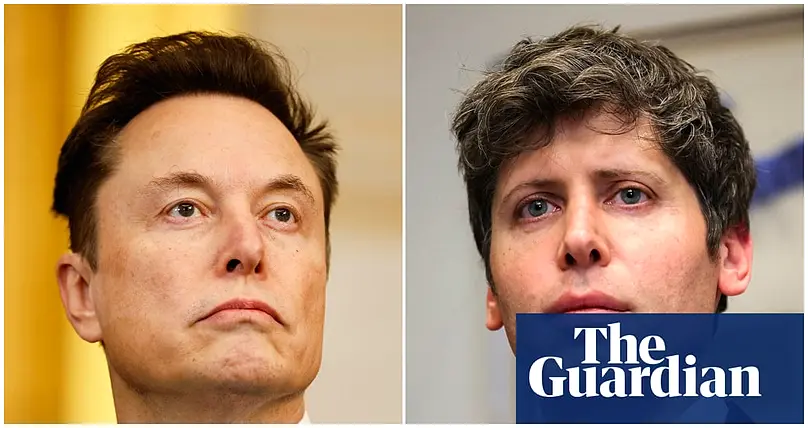
The gavel has fallen. And in the high-stakes drama that gripped Silicon Valley, it delivered a resounding defeat to the world's richest man, Elon Musk. A federal jury in Oakland sided firmly with Sam Altman, OpenAI, and its president, Greg Brockman, clearing them of Musk's fiery accusations.
This wasn't just a legal skirmish. It was a clash of titans, a bitter feud between two architects of modern tech, playing out over the soul — and future — of artificial intelligence.
The verdict? Delivered in less than two hours. A swift, brutal rejection of Musk’s claims that Altman had somehow “stolen a charity” and unjustly enriched himself. For OpenAI, it means more than just vindication; it paves a clearer path toward a potential $1 trillion public offering later this year. A staggering sum. A colossal ambition.
Even better for Altman and co.: the jury’s finding, while technically advisory, received immediate, unqualified backing from Judge Yvonne Gonzalez Rogers. Her words were unambiguous.
"I think there’s a substantial amount of evidence to support the jury’s finding, which is why I was prepared to dismiss on the spot."
Gonzalez Rogers wasted no time, dismissing Musk's claims on the spot. A clean sweep for the defendants.
The Statute of Limitations: Musk's Achilles' Heel
At the core of the jury's decision lay a less glamorous, but ultimately decisive, legal point: the statute of limitations. Musk's 2024 lawsuit, the jury determined, simply arrived too late. OpenAI argued, effectively, that Musk was perfectly aware of the company's shift towards a for-profit model as far back as 2017. This made his case, filed years later, outside the legal three-year window.
The trial itself stretched over three weeks. A parade of Silicon Valley heavyweights graced the stand. Musk. Altman. Brockman. Even Microsoft CEO Satya Nadella. Cross-examinations were often combative, raw. A true peek behind the polished corporate veneer.
Musk had sought an astounding $134 billion. He wanted it taken from OpenAI’s for-profit arm and rerouted to its non-profit. He demanded the removal of Altman and Brockman. He sought to unwind the entire for-profit restructuring. His central grievance: Altman had "swindled" him into co-founding OpenAI in 2015 as a non-profit, only to later pervert its mission for personal gain. A breach of charitable trust, he alleged. Unjust enrichment.
OpenAI, predictably, scoffed at the allegations. Musk knew, they contended. He was always in the loop regarding plans for a for-profit entity. Their attorneys painted a picture of a different motivation: jealousy. They suggested Musk, after a failed attempt to seize control of OpenAI in 2018, simply left in a huff. The company, they maintained, remains under the watchful eye of its non-profit, steadfast in its "mission" to better the world with AI. A noble defense, perhaps, but one steeped in the messy realities of power and ambition.
The trial, despite the final verdict, did lift the lid on OpenAI's fractious genesis. Unflattering details emerged, painting both moguls in shades less than heroic. For all the talk of AI’s future, the human drama — and ego — remains a constant, unsettling force.
Musk’s legal team, perhaps, should have checked the calendar first.

No comments yet. Be the first to share your thoughts!