
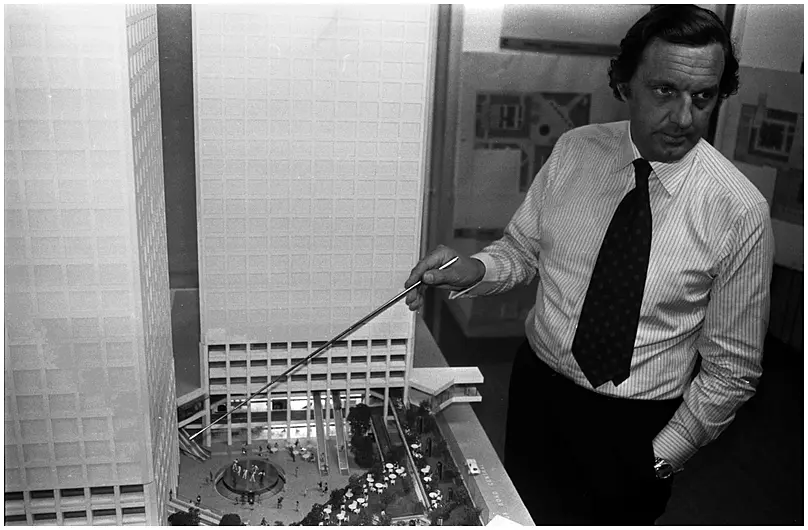
Three decades ago, a young property cadet named Michael Smith politely declined a job offer from Percy Weatherall, then CEO of Hongkong Land. Weatherall, according to Smith, wasn't pleased. Few dared to tell the titan 'no'.
Fast forward to today: Smith now occupies that very corner office. He’s the newly installed CEO. A quiet dinner, years later, saw him remind a forgetful Weatherall of the past rejection. Irony, it seems, has a long memory.
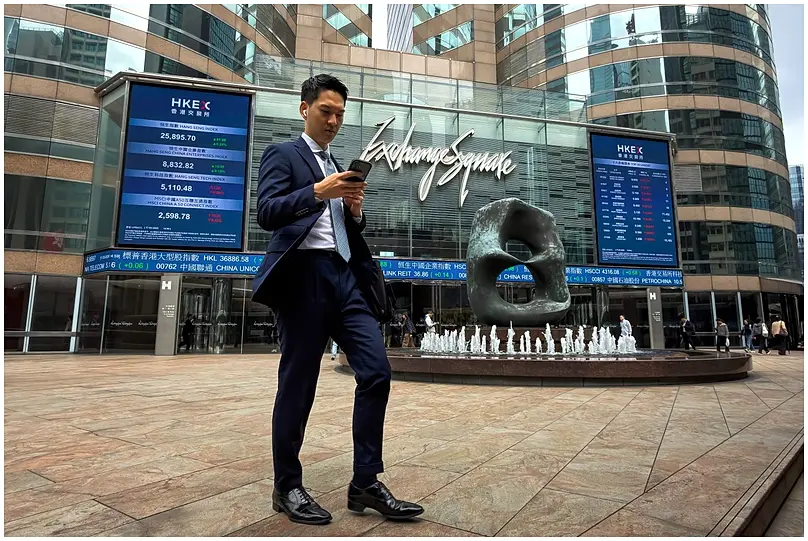
Hongkong Land. The name alone conjures images of the city's towering skyline. Founded in 1889, it isn’t just a developer; it's practically a monument. Central district, 4.8 million square feet of prime real estate. Exchange Square, home to the stock exchange. Jardine House, its protected harbor view a testament to colonial foresight. The Landmark, a retail mecca.
A Radical Departure
Yet, Smith is charting a radical course. He's actively loosening the company's historical ties to its namesake city. A bold move. Some might call it heresy.
“Hongkong Land has always been a proxy for Hong Kong’s office rents,” Smith revealed in an extended interview from his Central headquarters. “When we looked at historic office rental cycles and our share price, it was like 90% correlated. Everything else we did as a business didn’t matter to investors.”
His mandate, handed down by controlling shareholder Jardine Matheson, is clear: transform the landlord into something akin to a fund manager. Bring in institutional co-investors. Expand across Asia’s gateway cities. Not just Hong Kong. A seismic shift for a firm literally named for its home.
Its origins trace back to Catchick Paul Chater, a Calcutta-born British businessman, and James Johnstone Keswick of Jardine Matheson. Six days after its 1889 founding, Chater convinced the colonial government to reclaim 65 acres of waterfront. Alexandra House, Prince's Building, even the Mandarin Oriental hotel, all stand on that once-submerged land.
Chater was a force. He helped birth Hongkong Electric, Dairy Farm, and Wharf. Pillars of early Hong Kong. His name still adorns streets and structures. “Paul Catchick Chater is responsible, more than any other single individual, for dragging Hong Kong into the twentieth century,” says Vaudine England, a journalist-historian. “Chater shaped Hong Kong, both literally in redrawing the waterfront, and culturally.”
Today, Jardine Matheson, itself a Fortune Global 500 entity, owns Hongkong Land. They consolidated control in the 1980s, reining in an overextended developer.
Jardines needed a fixer. They found Smith, a veteran investment banker. UBS, Goldman Sachs – he built Asia’s real estate investment trust sector. Later, he helmed Mapletree Investments’ European and US operations. He saw how Singapore’s market operated. Capital discipline. A concept, he notes, Hong Kong developers often missed.
Hongkong Land was trading at an 80% discount to net asset value. Incredible assets, obviously worth a lot more than 20 cents on the dollar, with a great brand, but potentially not as progressive as some of the Singaporean companies.
Six months into the job, Smith unveiled his plan: wind down residential build-to-sell. Divest non-core assets. Slash exposure to any single geography below 40%. “When I joined, we had 50 to 60 projects across Asia…and we didn’t have scale in any market,” Smith recalls. Residential, he concluded, was too volatile. “You’re so subject to external factors. We bought land in Singapore just before the government increased the stamp duty from 30% to 60%. That kills your feasibility.”
The Singapore Gambit
Earlier this year, the Singapore Central Private Real Estate Fund (SCPREF) launched. $6.3 billion under management. It holds Hongkong Land's stakes in prime Singapore properties: Marina Bay Financial Centre, One Raffles Quay, and Asia Square. The Qatar Investment Authority, which could have simply cashed out, became a founding investor alongside Dutch pension giant APG Asset Management. A Southeast Asian sovereign wealth fund also joined, though Smith wouldn't confirm its identity.
“It surprised people in terms of the size and the speed in which we put that together, for a first-time fund manager,” Smith admits.
Hongkong Land targets $100 billion in assets under management by 2035. More than double its current figure. Smith promises no new equity issuance. No sacrifice of its investment-grade rating. “If we hit NAV or a premium, like REITs do, maybe you can raise equity then,” he says. “But when you’re at a discount? No.”
The market seems to agree with his vision. Shares, which ironically trade in London and Singapore, are up over 55% in the last year. They hit an all-time high in January. The company reported a net profit of $1.3 billion in 2025, a dramatic reversal from a $1.4 billion loss the year prior. Much of this was an $890 million fair-value gain on property revaluations. Underlying profit, however, slipped 8% to $458 million. The core still needs work.
Rental revenues tell a tale of two cities. Hong Kong office and retail income dropped 7%. Singapore office rents rose 4%. China retail surged 27%. Hong Kong still represents roughly 60% of total rental income. A figure Smith clearly aims to reduce.
Hong Kong's Lingering Shadow
Hong Kong is still reeling. Years of stringent COVID-zero policies chased away foreign companies, especially American ones, to Singapore. China’s economic woes—a collapsing property sector, tech crackdowns, sluggish consumption—further dull the city's luster as a mainland link. Some sectors simply haven't recovered. Commercial real estate remains in a deep slump. Retail struggles, as foreign tourists remain scarce. Mainland Chinese tourists now seek experiences, not just shopping. Even locals cross the border to Shenzhen.
Yet, amidst these headwinds, Smith remains surprisingly bullish on his Central district properties. Even as he diversifies. “This is the center of Hong Kong island. Whether it’s high net worth individuals or CEOs of companies, this is the place where people are going to be,” he asserts.
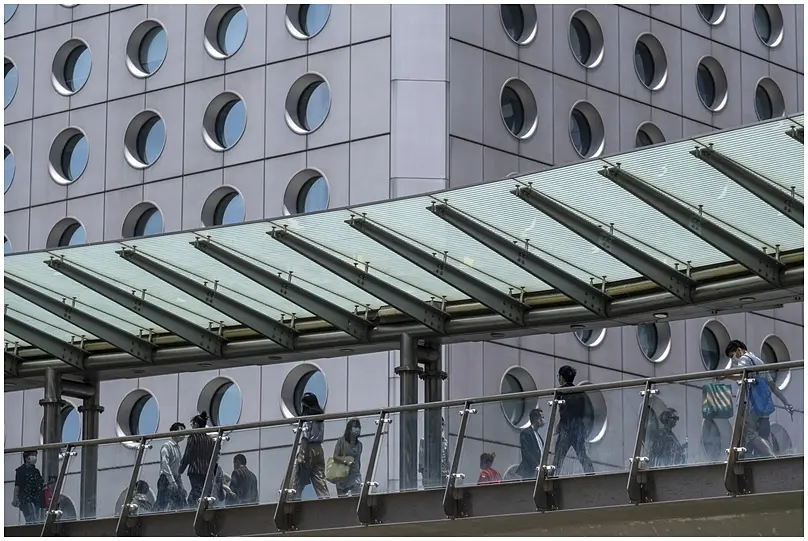
Grade A Central rents rose 3.5% in early 2026. “We felt an inflection point in our portfolio about a year ago. In the very core, super-prime office assets in Hong Kong, it was starting to feel really tight in terms of supply, and vacancies were falling rapidly,” Smith observed. “This year, it’s been phenomenal.”
Perhaps that optimism extends to Hong Kong itself. The city’s economy expanded 5.9% in Q1 2026, its fastest pace in five years. Retail sales jumped 12.8% year-on-year in March. Deloitte forecasts an 8% rise in retail sales this year.
The city’s IPO market helps. Hong Kong led global league tables in 2025 with $37 billion raised. Q1 2026 saw $14 billion raised, its strongest first quarter in five years. “What we’re seeing now is almost capital markets trickling up,” Smith muses, noting a “greater degree of confidence.”
A telling detail: 85% of Landmark shoppers are “852 number holders,” the city’s country code. Local wealth, not tourist spending, drives luxury here. Hong Kong, he reminds us, is second only to New York for high net worth individuals. This success begs an uncomfortable question: Is Hong Kong now a “K-shaped economy”? Where the affluent thrive, while others face mounting pressure?
Hongkong Land’s strategy, then, is a calculated double-down. It's a bet on the resilient segment of the market: the best downtown real estate in Asia’s financial hubs. Office towers for JPMorgan and Goldman Sachs. Malls for Louis Vuitton and Hermès. These, Smith believes, will only grow more valuable as companies chase talent and capital gravitates toward quality.
It’s a stark reversal from just a few years ago. The pandemic. Remote work. Empty city centers. Now, workers are returning. Companies offer carrots—nicer offices—and wield sticks—ending flexible schedules. Smith sees it everywhere. “It’s not just Hong Kong,” he notes. “You think about Manhattan: JPMorgan’s finished their headquarters, right in the heart of the city. King’s Cross in London.”
Beyond Hong Kong and Singapore, his gaze drifts to Tokyo, Seoul, and Sydney. The goal: replicate that integrated commercial ecosystem that defines Hongkong Land’s Central portfolio. “What we like are ecosystems in the middle of a city where infrastructure and transportation connect,” he concludes. Buying just one office building? “Makes no sense to me.” The name may cling, but the strategy is anything but static.

No comments yet. Be the first to share your thoughts!