
More than a million people across the UK now hold down multiple jobs. A stark figure. It's a clear signal: rising costs, pervasive job insecurity, and rapid industry shifts are pushing workers headfirst into an ever-expanding gig economy.
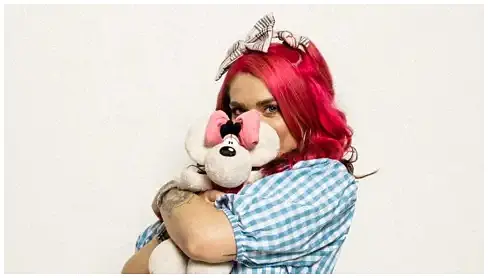
Billy-Jo Pierce in Bristol, a city infamous as the UK's second most expensive, describes her existence simply: "living in survival mode." She isn't alone. An increasing number of Britons are taking on extra paid roles, desperately fighting the cost of living crisis, searching for some semblance of financial security, a whisper of flexibility.
Pierce, just 29, originally from Birmingham, genuinely loves her work. But the admission comes quick: "the burn out is real."
Fifty to sixty hours a week. That's her average. She runs a business decorating teeth with cosmetic gems, then slides into reception shifts, behind a bar, works festivals, and online sells clothes. A relentless schedule.
Her entrepreneurial spark ignited during interior design studies. First-class honors. Yet, the industry proved a closed shop. A 9-to-5 gaming job became the anchor, her business a clandestine, after-hours pursuit.
"I'd finish work at like five, six pm and then go straight to my own business and stay there till like 11 pm." She grimaces. "I was working way too much, I had no social life."

"I felt like I was part of a massive rat race that I wasn't going to win in. I was working so hard but I wasn't saving and I wasn't really living." Laid off last year, she doubled down on her own venture. The one income proved insufficient. Bristol's rents. Everyday expenses. Impossible.
Now, home is a van. A practical, if sobering, solution to slash costs. Her weekdays are a blur: studio from 10:00 to 19:00, then reception work, often until 23:00. Weekends? Bars, festivals. Yet, the financial anxiety persists. "Work is a lot and I still feel like I'm not earning a good monthly wage to ever get close to owning a house," she laments.
It's a sentiment echoed widely. "I feel like it's quite the norm at the moment to work multiple jobs. There's definitely something wrong with what's going on at the moment."
Something indeed. The UK unemployment rate recently nudged up to 5%. Job vacancies? Lowest in five years. Simultaneously, the gig economy – that sprawling world of freelance and contract work – has exploded. Nearly five million people dabble in gig work, be it food delivery, design, cleaning, dog walking, or online retail. Only a fifth, however, rely on it as their primary income.
For many, especially younger generations, the idea of a single employer feels like a historical relic. Security evaporated.
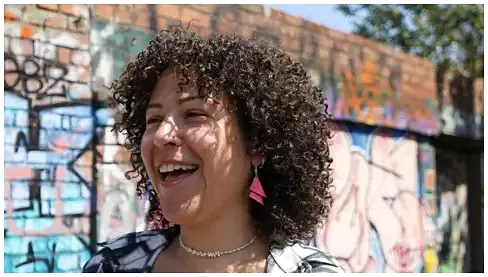
Engy Elboreini, a freelance graphic designer also based in Bristol, has seen her industry morph. Drastically. "The last two years have been my worst trading years," she admits. "I've noticed that within the digital design industry, tools like AI and Canva being so accessible to my client base means that they end up doing a lot of the work themselves."
Over a decade in design, and now, at 35, she believes AI has "eradicated" significant demand for traditional work. She now takes on creative production and coordination roles, even retraining in events management. "Whenever there is scarcity, as humans, we find solutions," she observes. "Especially if you're creative - you'll always find solutions." Pragmatic. Yet, financial pressures have forced cutbacks. No holidays. No festival tickets. "Is this the lifestyle that I want to live? No. But being in Bristol is fun and being embedded in creative circles is more than fulfilling."
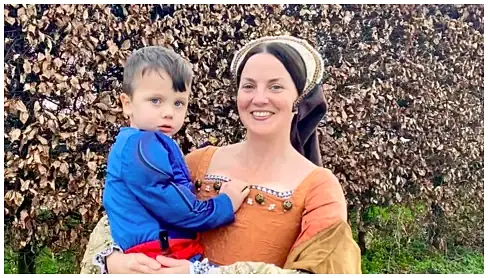
Then there's Hollie. A Bristolian, a single mother. Necessity, the ultimate driver. She needed work that bent to school hours, to her son Max. A recommendation pointed her towards life modeling. "It wasn't something that I ever planned, but when you're in that position, you become open to things you might not have considered before," she explains.
The 41-year-old also works as a part-time legal assistant and occasionally as a TV extra. But life modeling offers a unique fit. It came out of necessity. Pure and simple.
I'd rather take my clothes off and stand in a room full of artists than work a minimum wage job where I'm rushed off my feet and can't make ends meet and miss the time with my son.
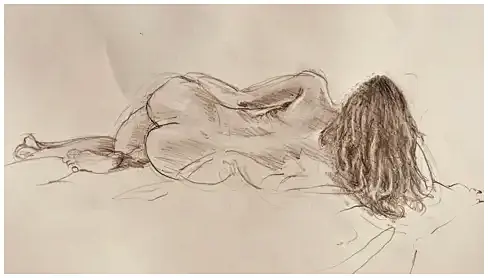
The work, she says, has paradoxically helped her overcome feelings of vulnerability. "I'm worried a lot of time about money or about my son. But I don't feel that fear naked in a room full of strangers."
Yet, the instability of gig work casts a long shadow. "Constant pressure." It's the refrain. "I'm always thinking about the next bill, the next job, even though work is coming through, there's no real security," she sighs.
Despite the inherent precariousness, Hollie, like many others, believes economic realities are fundamentally reshaping our relationship with work itself. What people are willing to do, just to get by, is changing.

No comments yet. Be the first to share your thoughts!