
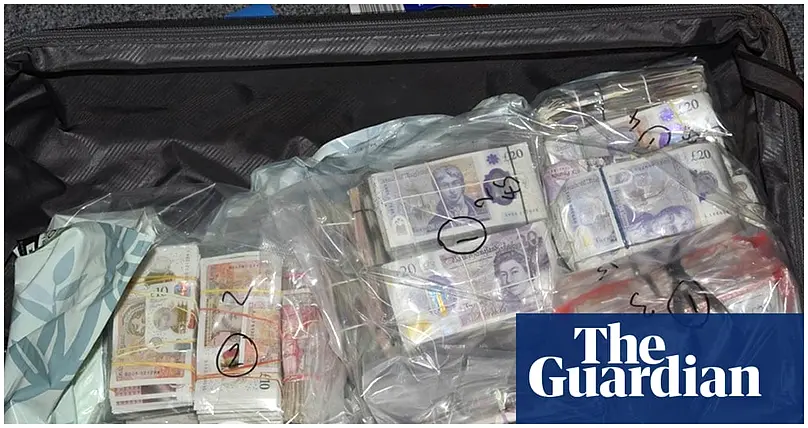
A staggering sum. More than 325 billion pounds sterling in illicit funds washes through the United Kingdom every single year, according to a bombshell new report. That’s over 10% of the nation’s entire economic output. It’s a figure that lays bare the sheer scale of the UK’s entanglement with financial crime, money laundering, systemic corruption, illegal trade, and blatant tax dodging.
But wait. It gets worse. When factoring in the UK’s vast network of Crown dependencies and overseas territories – think Jersey, the Cayman Islands – that annual torrent of dirty money balloons to an eye-watering 788 billion pounds. Nearly a trillion dollars. Each year. It's enough to make any economist pause.
This isn't some back-of-the-envelope calculation. The research, spearheaded by the Finance Innovation Lab charity, marks what’s believed to be the first truly comprehensive attempt to quantify these shadowy financial flows tied directly to the UK. Cross-border data on financial crime and tax evasion reveals a stark truth: Britain, for all its prestige, has solidified its role as a global conduit for illicit wealth.
The findings hit just as the UK quietly bumped its much-anticipated Illicit Finance Summit from June to December. A delay that, given these new figures, seems less like a scheduling hiccup and more like a desperate need for more time to prepare for the fallout.
The Finance Innovation Lab isn't mincing words. They’re urging Labour ministers to “demonstrate leadership,” to directly confront Britain’s uncomfortable, undeniable role in enabling economic crime and grand-scale tax evasion. It’s a pointed challenge to the current government, one that demands a reckoning with the nation’s financial soul.
Rachel Reeves has described the UK’s financial sector as the ‘crown jewel’ of the economy. Our report shows that, all too often, it is in fact playing a central role in supporting illicit financial flows: harming our economy, taking money from our public services, and supporting crime.
Jesse Griffiths, one of the report’s authors, pulled no punches. He highlighted the stark contrast between political rhetoric and economic reality. The UK’s vaunted financial sector, often lauded as the “crown jewel” by figures like Labour’s Rachel Reeves, is, he argues, routinely acting as an enabler for dirty money. This isn’t just abstract; it bleeds public services dry and fuels global criminality. Understanding this scale, Griffiths insists, is merely the first, essential step toward turning the tide.
A Push for Real Action
The calls for governmental action aren't isolated. The all-party parliamentary group (APPG) on Anti-Corruption and Responsible Tax is throwing its weight behind the Finance Innovation Lab. Their demands include a significant boost in funding for state investigators. Groups like the National Crime Agency and Serious Fraud Office, they suggest, could become self-financing through increased fines and asset seizures. A compelling argument for a cash-strapped Treasury.
Perhaps most controversially, the Lab also advocates for a “pause” on the government’s ambitious plans to transform London into an international crypto hub. This strategy, partly influenced by the previous Trump administration’s enthusiasm for digital assets, now looks increasingly questionable. Cryptocurrencies, the report warns, are proving to be fertile ground for money laundering and clandestine market dealings. The global role of the UK as a financial hub may bring benefits, but it also, unequivocally, attracts the worst kind of activity. It corrupts markets. It erodes public trust. The rush into crypto, the report implies, could simply make a bad situation immeasurably worse.
A crackdown on UK-linked tax havens is also key. Full transparency over the true owners of shell companies, especially in notoriously secretive overseas territories like the British Virgin Islands, is non-negotiable.
Phil Brickell, the Labour chair of the APPG, summed up the sentiment succinctly: “After years of inaction from previous governments it is time for us to become part of the solution, not part of the problem.” It’s time, he declared, for enforcement agencies to get the resources they need. And for those veiled corporate secrets to finally, definitively, lift. The message is clear: the UK faces a choice. Will it continue to be a haven for illicit wealth, or will it finally clean house?



No comments yet. Be the first to share your thoughts!