

A chorus of leading international experts now demands the World Health Organization declare the climate crisis a global public health emergency. Their grim warning? Failure to act guarantees millions more unnecessary deaths.
This isn't hyperbole. The independent pan-European commission on climate and health, convened by the WHO itself, didn't pull punches. They concluded the climate crisis presents such an immense worldwide health threat that it warrants the highest alert: a “public health emergency of international concern” (Pheic).
Think about it. Vector-borne diseases like dengue and chikungunya, already on the march. The brutal toll of extreme weather events. The relentless global heating. Food insecurity gnawing at populations. The insidious creep of air pollution. All these factors, the commission's report insists, make a Pheic not just advisable, but absolutely necessary. This report lands on European ministers’ desks Sunday, just before the WHO’s world health assembly convenes.
Pheics. They're not issued lightly. These are the WHO's most serious health alerts, previously reserved for scourges like Covid and Mpox. A declaration wouldn't magically halt climate change, no. But it would, crucially, trigger the kind of coordinated international response this monumental health crisis demands. A response that, tellingly, remains largely absent.
The 11-member independent commission, a formidable group including former health and climate ministers, laid it bare: “Far from being a fading priority or fake news, climate change poses an immediate and long-term threat to health, economic, food, water, environmental, personal, community and national security.”
Katrín Jakobsdóttir, former prime minister of Iceland and the commission's chair, put it bluntly to The Guardian: “The climate crisis may not be a pandemic, but it’s still a public health emergency that threatens humanity’s very health and survival. And if we don’t act more quickly and comprehensively, many millions more people could die or face life-changing illness.”
Sir Andrew Haines, an authority on environmental change and public health at the London School of Hygiene & Tropical Medicine, served as the commission’s chief scientific adviser. He emphasized, “WHO has already recognised that climate change is a major threat to global health. What we’re asking for is a step further.”
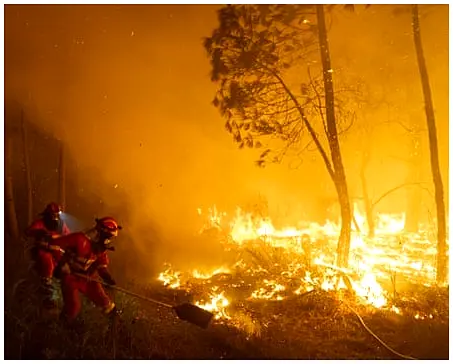
A dangerous step, indeed. Haines warned, continued emissions will only accelerate health risks for both current and future generations. More people will suffer and die from excess heat, from floods, from infectious diseases. Wildfires will choke us with air pollution. Preterm births could rise. Food insecurity, a constant specter.
The Fossil Fuel Paradox
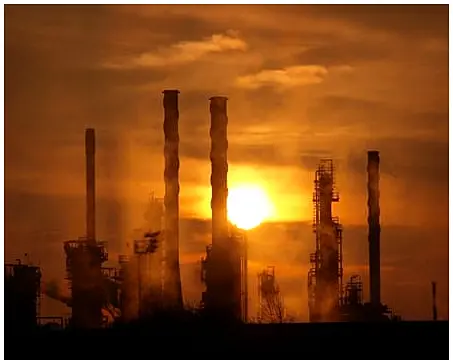
Perhaps the most damning indictment from the commission targets governments. They are urged to cease subsidizing fossil fuels. These very industries, the report states, are directly responsible for 600,000 premature deaths annually in Europe alone. Europe, incidentally, pours roughly €444 billion (or £387 billion) each year into oil and gas production subsidies.
Consider this shocking figure: in 2023, fossil fuel subsidies in a dozen European nations actually surpassed 10% of their national health expenditure. In four of those countries, the subsidies exceeded the entire national health budget. A public health failure? Absolutely.
“European governments are subsidising the very industries responsible for their own citizens’ premature deaths. We need health leaders to really step into the climate debate and not just be on the receiving end of it.”
Jakobsdóttir didn't mince words. “This is not a sustainable energy policy. It’s really more of a public health failure.” She added a chilling thought: new fossil fuel subsidies, or countries reconsidering drilling post-Iran crisis, would be “catastrophic for health.”
Beyond the raw data, the report called for a frontal assault on disinformation. It pushed for wider use of national climate health impact assessments. And it demanded recognition of another truth: climate change is profoundly a mental health crisis.
Challenging skepticism and misinformation, Jakobsdóttir offered a simple strategy: “make it personal.” This isn’t some far-off problem for someone else. “Climate change is not happening somewhere else, to someone else, in the future. It is shortening lives in European cities right now. It is filling hospitals. It is driving anxiety and stress and other mental health issues.”
The solutions, she argued, are self-evident: clean air, active travel, insulated homes, sustainable food. Policies that make people healthier and happier today. “When the health argument and the climate argument are the same argument, it becomes very hard to oppose.”
Even healthcare systems themselves need an overhaul. Adaptation. Countries must understand where facilities are, their flood risk, how they'd cope with extended heatwaves. Hospitals, Haines observed, often sit on floodplains, rarely models of energy efficiency. Even temperate UK hospitals struggle with extreme heat, many built long before climate change was a serious consideration.
The healthcare sector, ironically, accounts for 5% of global emissions. It must prioritize its own resilience. An urgent imperative.
Dr. Hans Kluge, WHO’s regional director for Europe, weighed in. The conflicts in Ukraine and the Middle East, he noted, starkly reveal the true cost of fossil fuel dependency: not just higher bills, but shattered health systems, disrupted food and fuel, societies buckling under pressure.
“The case for acting on climate now is not just environmental. It is a security argument, a health argument and an economic argument, all at once. And it is a moral imperative.” Kluge didn't hold back. The decisions made by governments today, he declared, will define the disease burden carried by children currently in primary school.
Johan Rockström, director of the Potsdam Institute for Climate Impact Research, welcomed the report. He saw “ample scientific evidence” in the planet's current state, breaching multiple boundaries and creating public health threats for millions, to justify a Pheic declaration.
The evidence, the warnings, the moral imperative. It’s all there. The question now is whether anyone, finally, will listen.


No comments yet. Be the first to share your thoughts!