

Forget the latest serums or extreme diets. A groundbreaking study out of the UK suggests the secret to slowing biological aging might be found not in a lab, but in a museum. Or, perhaps, on a dance floor.
Researchers at University College London dove into data from over 3,500 adults. Their discovery? Those who regularly immersed themselves in arts and cultural activities showed tell-tale signs of decelerated biological aging. This wasn't guesswork. They used DNA-based measurements, precise "epigenetic clocks" that track chemical changes over time.
This isn't just about passive viewing. The study scrutinized participation across a spectrum: painting, photography, dancing, singing, visiting museums, attending cultural events, historic sites. A diverse list.
What they found was compelling. Adults who participated more often, in a wider array of activities, consistently scored lower on aging markers. A slower biological clock, compared to their less culturally inclined counterparts. The effect? It seemed to intensify dramatically for individuals beyond age 40. Not only that, these observed benefits stood shoulder-to-shoulder with those linked to physical activity – a behavior long lauded for its healthy aging properties. That's a serious comparison.

Jessica Mack, a health and wellness authority and founder of The Functional Consulting Group, wasn't involved in the research, yet she sees profound implications. "Arts and cultural engagement may be associated with slower epigenetic aging, with effects comparable in some measures to physical activity," Mack states.
She contends these aren't just pleasant pastimes. Engaging with art, music, or history, Mack believes, can actively reduce stress. It sharpens emotional regulation. It deepens social connections. These are fundamental processes.
"So when researchers find that the people who go to museums have younger epigenetic age, we cannot tell whether the museum visits slowed their aging, or whether their slower aging is what allowed them to keep visiting museums."
But a word of caution is paramount. Professor Steve Horvath of UCLA, a pioneer in epigenetic aging research, reminds us: "This is an observational study, not an experiment." His point is critical. We can't definitively claim that a museum visit causes slower aging. The reverse could also be true. Perhaps those who are biologically aging slower simply possess the vitality and means to pursue cultural activities in the first place.
Horvath, though not dismissive, urges prudence. He labels the research "methodologically careful," certainly worth more exploration. Both scenarios, he acknowledges, likely hold some truth.
Crucially, the study's conclusions held firm even after accounting for a host of confounding factors. Smoking, income levels, body weight, other lifestyle habits – none of them erased the observed link.
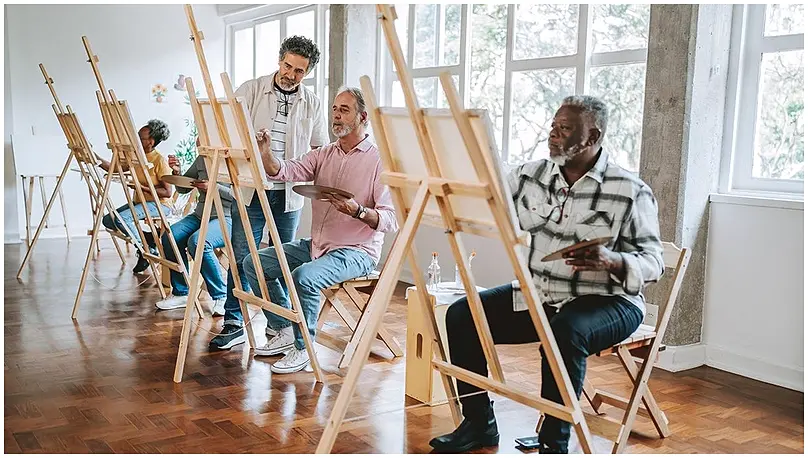
So, what's the takeaway? Even if we can't draw a direct causal arrow, the benefits of staying socially and mentally active remain undeniable for healthier aging. Horvath sums it up succinctly: "The prescription is the same. Keep going." Perhaps the fountain of youth isn't some mythical spring, but rather, the vibrant rhythm of a life well-lived and culturally enriched.



No comments yet. Be the first to share your thoughts!