
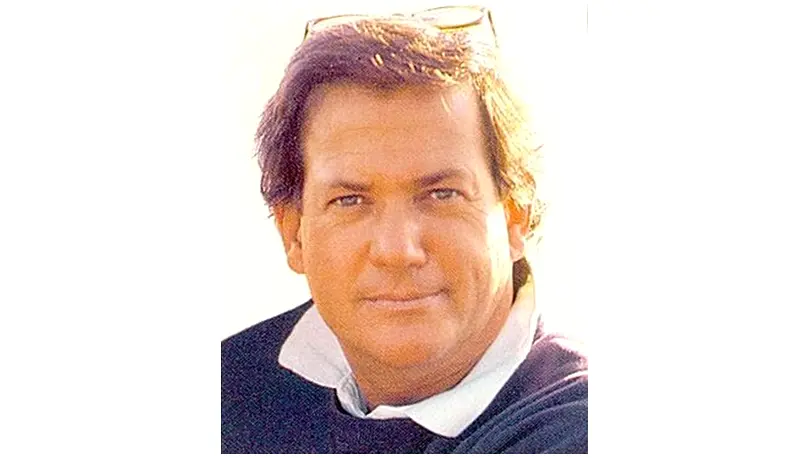
Tony Seiniger, a figure whose name might not echo through every household but whose visual language defined an entire industry, has passed away. The man known simply as “The Godfather of Movie Advertising” for his seismic impact on film campaigns, including the indelible “Jaws” poster, died May 11 in Atlanta. He was 87.
A New York City native, Seiniger honed his eye at the Rhode Island School of Design. His early career at EUE/Screen Gems in New York saw him immersed in commercial production, then pivot to key art design. Posters for gritty urban tales like “Shaft” and Martin Scorsese’s “Mean Streets” bear his early touch.
His true ascent began when he struck out on his own, establishing Seiniger Advertising in Los Angeles. The campaign for “One Flew Over the Cuckoo’s Nest” was an early triumph. But then came the behemoth. The great white shark. Seiniger didn't just design the iconic “Jaws” poster; he adapted Roger Kastel’s original painting from the book cover, etching it into the collective unconscious. It was an instant classic. A masterpiece of menace.
He didn't just advertise films; he created the visual grammar for how Hollywood sold its dreams, its nightmares, its very soul. He made you want to buy a ticket. No, he made you need to buy a ticket.
His influence broadened. Vastly. Over decades, Seiniger oversaw and designed campaigns for a staggering array of cinematic touchstones. Think “Eyes of Laura Mars,” the cult phenomenon “The Rocky Horror Picture Show,” “Field of Dreams,” and the witty “Bull Durham.” His fingerprints were on horror like “Poltergeist,” rom-coms such as “Moonstruck” and “Risky Business.” Teen angst found its voice in “Teachers,” “The Breakfast Club,” and “Ferris Bueller’s Day Off.” Later, blockbusters like “Total Recall,” legal thrillers like “The Firm,” and beloved comedies “Planes, Trains and Automobiles,” and family epics “Hook” all bore his unmistakable strategic vision. Even the sweeping historical drama “The Last Emperor” carried his mark.
His peers recognized the monumental contribution. In 1998, Seiniger received the Key Art Awards Lifetime Achievement Award. He was also a mentor. A friend. His collaboration with illustrator Drew Struzan is legendary. Struzan, an artistic titan in his own right, often credited Seiniger with discovering him. An Instagram post from Struzan’s estate recounted how Seiniger, spotting Struzan’s art on an Alice Cooper “Welcome to My Nightmare” billboard, made the call that launched a career. Tony’s insight, it was said, put Drew on the road to greatness. An undisputed fact.
Seiniger leaves behind a profound legacy, an industry reshaped by his vision, and a family that includes four daughters—Jillian, Heather, Sara, and Tamar—five grandchildren, and his longtime partner, Wriston.
He didn't just sell movies. He taught us how to see them, even before the lights went down.


No comments yet. Be the first to share your thoughts!