
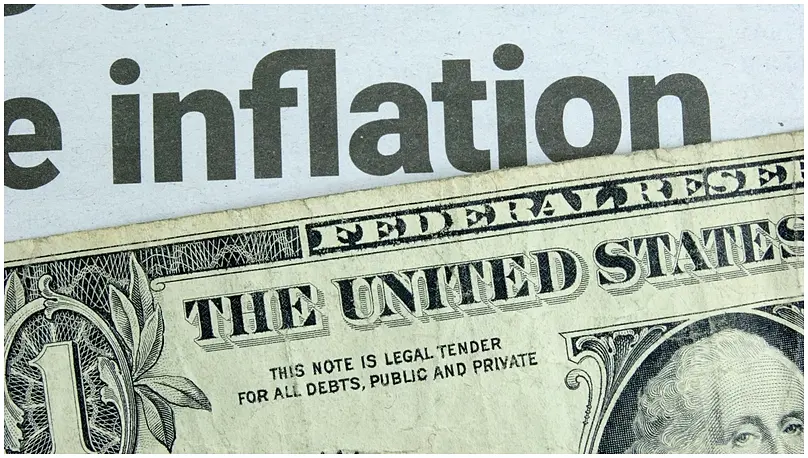
When the latest inflation numbers hit, they landed with a thud. For many, the data painted a stark picture of economic pressure, one that newly confirmed Federal Reserve Chair Kevin Warsh steps directly into. His work, observers note, is already cut out for him.
But the true narrative buried within these reports? Most seem to be missing it entirely.
The Inflationary Blitz
April’s Consumer Price Index (CPI) screamed 3.8% year-over-year. That’s a near three-year high. Energy, naturally, was a dominant force, surging 17.9%. Gasoline alone spiked 28.4%. Electricity? Up 6.1%.
But here’s the unsettling detail: Core prices, which strip out the volatile food and energy sectors, climbed 0.4% in April. That’s double the pace seen in both February and March. This isn't just about gas prices anymore. Energy inflation is metastasizing, spilling into the broader economy with alarming speed.
Then came the Producer Price Index (PPI). This wasn't just bad; it was, as some market commentators bluntly put it, "a disaster."
"The PPI is now up 6% over the past 12 months. Six percent! Remember, the PPI tells us what 'producers' are paying. You think they’ll eat those costs? Not on your life."
Producers don't absorb 6% wholesale cost increases. They pass them on. That’s why the PPI is a crucial leading indicator for consumer inflation. Deeper analysis reveals wholesale inflation jumped 1.4% in April, with goods costs rising 2% and service costs 1.2%. This suggests inflation is deeply embedded, poised to linger.
The immediate fallout: Treasury yields are climbing, the yield curve is flattening, and any notion of near-term rate cuts has vanished from the discourse.
Warsh's Gambit
Yet, a glimmer. Warsh isn't operating in a vacuum. This is where the story pivots.
Many investors paint Warsh as a traditional inflation hawk, but that view misses critical context. He served on the Fed’s Board of Governors during the 2008 financial crisis, working directly with Ben Bernanke. He knows systemic stress intimately. He understands how to react when the financial edifice trembles.
Crucially, Warsh appears to grasp the transformative power of AI-driven productivity gains. These aren't just buzzwords; they represent economic growth without the traditional inflationary pressures seen in past cycles. That gives the Fed, under his potential stewardship, vastly more room to maneuver.
He also finds a powerful ally in Treasury Secretary Scott Bessent. These aren't political appointees fresh from academia. They’re seasoned, market-tested professionals. Bessent famously helped George Soros make a billion by betting against the Bank of England. Warsh partnered with Stanley Druckenmiller, the man who executed that very trade. Their combined private-sector savvy could steer policy with a distinct, pragmatic hand.
Bessent has publicly advocated for significant rate cuts—150 basis points, no less. While Warsh still needs to build consensus within the Fed, and Middle East tensions could certainly delay timelines, the possibility of rate cuts later this year, according to some analyses, remains very real.
The Unseen Opportunity
Yes, inflation numbers disappointed. But pause. The S&P 500 is tracking for nearly 20% earnings growth this quarter, with robust forecasts for the rest of the year. Stocks, it turns out, are a potent inflation hedge. The same forces that spook headlines are fueling pricing power and profit growth within American companies.
Indeed, some veteran market watchers call this environment "one of the best" they’ve seen in decades. The underlying fundamentals, despite the noise, are surprisingly strong.
And when rate cuts do arrive—a prospect many still consider inevitable—the effect could be explosive. Not for the mega-cap giants everyone already owns, but for smaller, domestically focused companies. These are the firms most sensitive to borrowing costs, most leveraged to U.S. economic growth.
Small caps are already stirring. The Russell 2000, a key barometer for smaller companies, has climbed 38% over the past year. When these stocks move, they do so with startling speed and magnitude. One market analyst recounted a 1,100% gain with Bloom Energy Corp. (BE) in their small-cap advisory.
This, some believe, is just the beginning.
This moment, they argue, echoes rare market setups seen only a handful of times: 1995, 2001, 2008, 2020. Each period heralded a window of consistent, sustained interest rate cuts, propelling a specific group of smaller stocks to extraordinary gains long before the broader market caught on. This, they contend, is the fifth such window.
A sophisticated "Stock Grader system" is reportedly flagging dozens of these companies, showing the early signals of strong fundamentals and institutional money quietly positioning itself ahead of mainstream headlines.
Such opportunities, it seems, never stay hidden for long. The advantage, as always, goes to those positioned before the crowd.


No comments yet. Be the first to share your thoughts!