
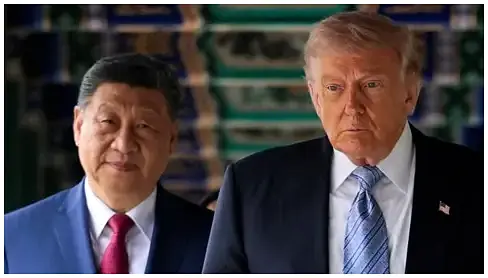
Aboard Air Force One, just hours removed from two intense days of talks in Beijing, President Donald Trump offered a disquieting postscript to his summit with Chinese President Xi Jinping. On the sensitive issue of Taiwan – a self-governing island Beijing vows to reclaim, by force if necessary – the American leader declared he had “made no commitment either way.”
This wasn't a casual aside. Far from it. Trump confirmed the Taiwan question had dominated significant portions of their discussion. Xi, he recounted, pressed directly: Would the U.S. defend the island? Trump's reply? "I don't talk about that." A blunt refusal. A strategic void, perhaps.
The stakes couldn't be higher. Washington, by statute, is bound to provide Taiwan the means to defend itself. Decades of American administrations have painstakingly threaded a diplomatic needle, balancing ties with Beijing against Taipei's security. Now, that balance feels more precarious than ever.
Xi, by Trump’s account, “feels very strongly” about Taiwan. He “doesn’t want to see a movement for independence.” Chinese state media, amplifying the message, quoted Xi warning the "Taiwan question is the most important issue in China-US relations." He didn't mince words. "If mishandled, the two nations could collide or even come into conflict."
A conflict? Trump dismissed the idea. "No, I don't think so. I think we'll be fine." Yet, his subsequent comments offered little comfort to Taipei, or even to US allies in the Pacific.
“I don't want to say that. I'm not going to say that. There's only one person that knows that. You know who it is? Me.”
That was Trump’s definitive answer when reporters again pushed on the US defense of Taiwan should Beijing launch an attack. He then reiterated his earlier exchange with Xi. "He asked me if I'd defend them. I said, 'I don't talk about that'." The ambiguity, almost deliberate, hangs heavy.
Arms sales to Taiwan, a perennial flashpoint for Beijing, were also on the table. Trump promised a "determination over a fairly short period," but only after consulting with Taiwan's President Lai Ching-te. A gesture? Or just more delay?
Taiwanese Foreign Minister Lin Chia-lung was predictably cautious. His team, he assured, maintained "good communication" with the US. He pointedly described Taiwan as a "guardian of peace and stability," then accused China of ratcheting up risk with its "aggressive military actions and authoritarian oppression." A pointed retort, if ever there was one.
So, the question remains: what does "no commitment either way" truly mean? A cunning play for leverage? Or a calculated retreat from a binding obligation? Only one person knows. And he isn’t talking.
No comments yet. Be the first to share your thoughts!