
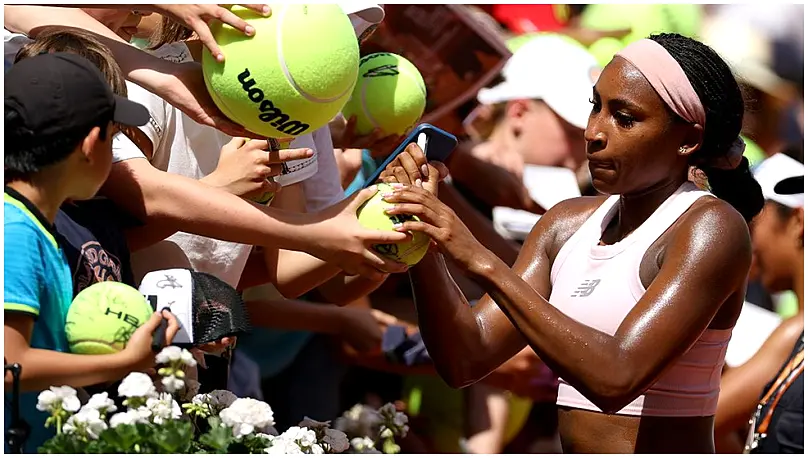
The clay courts of Roland Garros are barely dry, the roar of the crowd still distant, yet a different kind of match has already begun. Off-court. A high-stakes negotiation. Tennis's elite are tired of crumbs. They want more of the Grand Slam pie, and Paris is feeling the heat.
Player representatives, a formidable collective pushing for a significantly larger share of Grand Slam revenues, sat down with French Open organizers. A "positive and transparent exchange," the French Tennis Federation (FFT) declared Saturday. "Constructive," they called it.
Amelie Mauresmo, the former world number one and Roland Garros director, was there. She faced a united front, one that included agents for titans like Jannik Sinner and Aryna Sabalenka. The FFT, surprisingly, agreed to direct talks with these 'protesting' athletes. A significant concession, some might say.
Their objective is clear. A 22 percent cut of Grand Slam revenues by 2030. Currently, players pocket roughly 15 percent. That's not all. They also demand a louder voice in tournament decisions. And "well-being" investments—think healthcare, maternity leave, pensions. Basic rights, many argue, for a global, multi-billion-dollar sport.
Their objective is clear: a 22 percent cut of Grand Slam revenues by 2030. Currently, they pocket roughly 15 percent.
To underscore their dissatisfaction—or perhaps, to twist the arm of power—some twenty top players engaged in a media blackout. Or, rather, a media shrink. Fifteen-minute interview limits. A subtle but pointed act of defiance during the tournament's pre-game media frenzy.
This isn't just about Paris. Wimbledon and the US Open face similar upcoming confrontations. Representatives plan separate meetings, post-Roland Garros. Curiously, the Australian Open remains off the negotiation table. For now.
Mauresmo, for her part, already stated French Open prize money won't budge this year. A firm line. But what about next year? Or the year after?
The 'constructive' talks are just the first serve in what promises to be a protracted, highly public match over power and profits. Will the players' united front force a permanent shift in the Grand Slam hierarchy, or will the federations hold their ground? The ball, as they say, is now firmly in play.

No comments yet. Be the first to share your thoughts!