
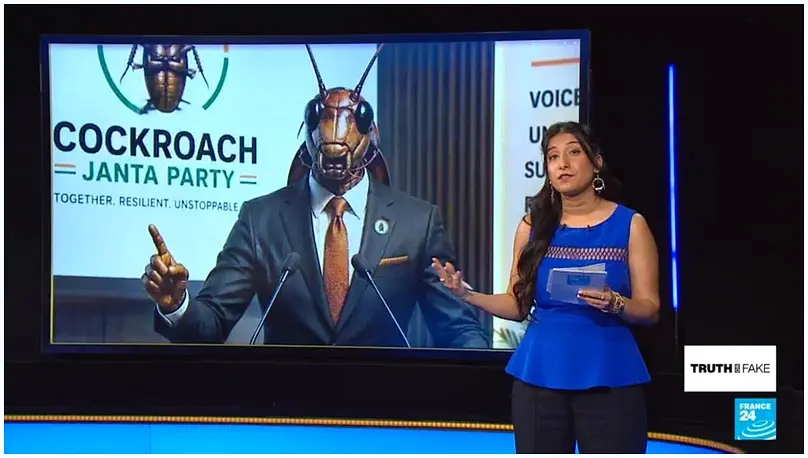
A curious phenomenon has swept across India’s digital sphere: a political satire movement led by an unlikely mascot, the cockroach. Yes, a cockroach. This isn't a surrealist art project; it’s the Cockroach Janta Party (CJP), born from a judicial slip of the tongue that quickly escalated into a viral youth rebellion.
It all began when India's chief justice, in what he later claimed was a misquote, referred to the nation's unemployed youth as “cockroaches.” The internet, predictably, exploded. Outrage festered. Amidst the digital fury, 30-year-old Abhijeet Dipke posed a simple, yet potent, question online: “What if all cockroaches come together?”
That rhetorical query became a rallying cry. Within hours, thousands of young, frustrated individuals signed up to Dipke’s satirical online form. A public relations student by trade, Dipke clearly struck a nerve. The movement snowballed, now boasting nearly 23 million Instagram followers. And counting.
The CJP leans heavily into self-deprecation, a torrent of memes, jokes, and AI-generated content. But beneath the humor, a sharp edge of youth frustration slices through. For good reason. A recent report from Azim Premji University painted a grim picture: nearly 40 percent of graduates aged 25 or younger find themselves without work. A sobering statistic, indeed.
Beyond the gags, this “Cockroach Party” has articulated a serious five-point agenda. They demand protection for legitimate votes, a significant 50 percent representation for women, and, perhaps most pointedly, a free and independent press. Lofty goals for a group that started as a joke.
Pushback and Persistence
Naturally, such rapid ascent hasn't gone unchallenged. Dipke recently informed FRANCE 24 that the movement has faced significant resistance. Both the CJP’s official Instagram and his personal account have been hacked. Its X (formerly Twitter) account? Withheld in India. The website? Temporarily scrubbed from the internet, though it has since reappeared. Online abuse and harassment have become daily fixtures.
"What if all cockroaches come together?" The question, once satirical, now carries the weight of millions of disaffected youth.
There have also been accusations, predictably, that the CJP's 22 million followers are mostly bots or foreign accounts from Pakistan. Dipke, however, dismisses these claims. He shared a screen recording of his account’s demographics, he told FRANCE 24, indicating that a resounding 94 percent of its followers are, in fact, Indian. A clear rebuttal, or just another digital skirmish in a larger information war?
So, what’s next for India’s “cockroaches”? Dipke maintains that while its roots are firmly in satire, the CJP aims to evolve. Its ultimate goal? To become a genuine voice, a platform for dialogue with India's vast youth demographic. The next move, he says, will come only after he's listened to the millions who've pledged their support. Whether this digital swarm can translate online clamor into tangible influence remains the defining question.



No comments yet. Be the first to share your thoughts!