
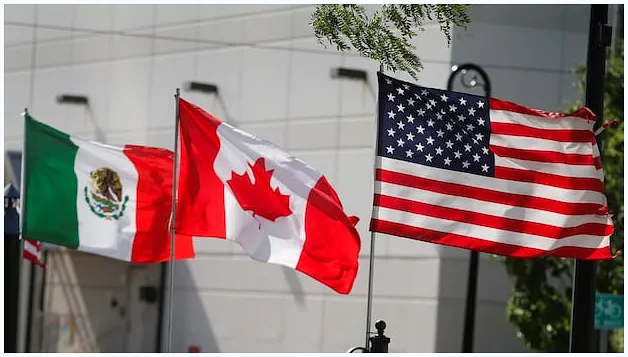
The clock ticks. North America's colossal trade pact, CUSMA, is hurtling toward its first joint review on July 1. But the supposed architects of its renewal, Canada and the United States, appear locked in a frustrating dance of non-commitment. It's less a negotiation, more a standoff.
Canadian Minister Dominic LeBlanc, tasked with navigating this high-stakes portfolio, plans a trip to Washington. Details? Scarce. His spokespeople remain tight-lipped on dates, meeting schedules, even the scope of discussions. This lack of transparency only fuels speculation.
A Dialogue of Disconnect
LeBlanc's singular day of in-person talks over the past seven months with U.S. Trade Representative Jamieson Greer speaks volumes. The CUSMA deal, which shields roughly $1.3 trillion in annual Canada-U.S. trade from the capricious tariff regime, seems to be an afterthought in Washington. Or, perhaps, a deliberate leverage point.
Greer, meanwhile, hasn’t pulled punches. Speaking at the Council on Foreign Relations, he painted Canada as a stubborn outlier. Its sin? Retaliating against tariffs. "Two countries in the world retaliated against us: the People's Republic of China and Canada," Greer stated. A stark, perhaps even calculated, comparison.
The U.S. is blaming Canada for the lack of movement, but the U.S. is putting Canada in a position where it has little room to move.
The U.S. position? Unwavering. Tariffs, say Trump administration officials, are a "fact of life" for Canada, CUSMA or not. And Washington wants its pound of flesh. An "entry fee" of sorts, before substantive talks even begin. Sources cite demands like ending provincial boycotts of U.S. alcohol and scrapping Canada's Online Streaming Act, which mandates support for Canadian content production.
Canada's Counterpoint, Experts' Warnings
Canada insists it's ready. LeBlanc’s press secretary, Gabriel Brunet, highlighted proposals offering "hundreds of billions of dollars in economic value for American industries" in exchange for tariff relief. But the U.S. has offered only a sliver of relief: for steel and aluminum firms willing to relocate production south of the border.
"Fundamental areas of disagreement," notes Eric Miller, a Washington-based Canada-U.S. trade expert. He advises swift action but cautions against desperation. "Anybody can negotiate a bad deal quickly. But what Canada needs is a good deal." Miller also flagged Mexico's more advanced talks as a potential pressure point, should they seal a separate deal.
The threat of U.S. withdrawal from CUSMA—a mere six months' notice away—looms large. It would instantly strip Canadian exports of their tariff exemptions. Christopher Sands of Johns Hopkins University views Trump’s repeated threats as pure bargaining tactics. A play for more concessions.
Steve Verheul, Canada's chief negotiator for the original CUSMA talks, is blunt: this review will shape Canada's economic future. He urged the federal government to stand firm. Despite U.S. accusations, Canada has little room to maneuver, he told a Senate committee. He believes broad U.S. support for renewal will eventually build pressure on Washington. "Canada needs to hold its ground."
So, the details of LeBlanc's upcoming trip remain locked away. The U.S. Trade Representative's office is silent on Greer's plans. The future of North America's economic backbone, it seems, remains shrouded in uncertainty. A high-stakes game of chicken, with trillion-dollar consequences.



No comments yet. Be the first to share your thoughts!