
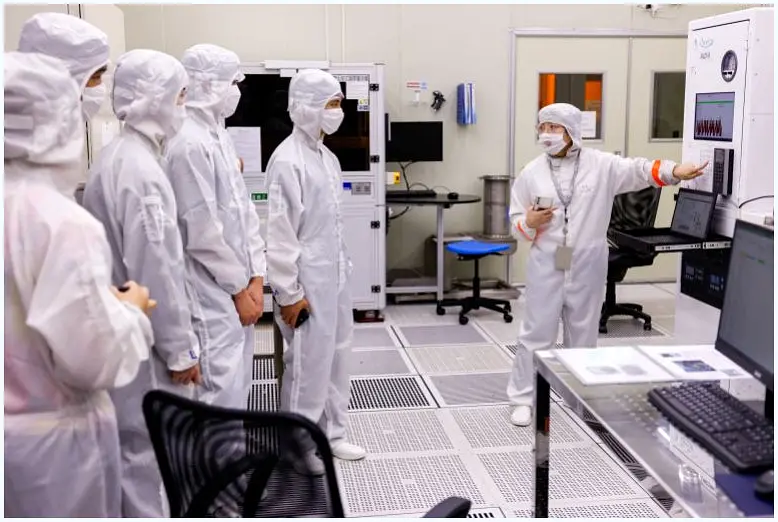
Taipei, Taiwan — The AI revolution has undeniably cast a golden glow across Taiwan, particularly for those embedded in its formidable tech sector. Li, an engineer at the computer giant ASUS, confirms it. This is a thrilling time, he says.
Taiwan is, after all, the undisputed titan of semiconductors, churning out roughly 90 percent of the most advanced chips that power the world's leading AI models. Think ChatGPT, think Claude. This tiny island nation builds their very brains.
“I’ve felt Taiwan’s tech and computer industry becoming more... lively,” Li, who opted for anonymity to speak freely, told Al Jazeera. He pointed to events like the upcoming Computex expo, a five-day AI feast, as proof.
Yet, beneath the glittering surface, a quiet anxiety festers. Li, like many others, worries the spoils of this AI windfall aren’t landing equally.
“Most industries unrelated to tech don’t seem to be feeling the benefits,” Li explains, a note of concern in his voice. Many of his former classmates, now outside the tech bubble, aren’t exactly thriving. “It’s mainly the industries at the front of this tech wave that are benefitting.”
Taiwan's economic numbers, on paper, are nothing short of spectacular. GDP surged an astonishing 8.63 percent in 2025, followed by a dizzying 13.69 percent expansion in the first quarter of this year. Exports last year catapulted by 34.9 percent, hitting an eye-watering $640.7 billion. Over two-thirds of that colossal sum? Pure tech.
Semiconductors alone claim more than 20 percent of Taiwan’s GDP, U.S. trade data shows. And one name dominates: Taiwan Semiconductor Manufacturing Company (TSMC), a behemoth whose client roster includes Nvidia and Apple. TSMC, by itself, accounts for over 40 percent of the island’s entire stock market value. Power. Concentrated power.
The Shadow of Inequality
Impressive as these figures are, they whisper a warning. Over-reliance. Central Bank Governor Yang Chin-lung has already sounded the alarm, envisioning an emerging “K-shaped economy.” One arm soars, powered by innovation. The other languishes, stuck in stagnation.
Despite its outsized economic influence, the semiconductor sector isn't a jobs engine. It employs just 300,000 people from an 11-million-strong workforce. Dachrahn Wu of National Central University’s Research Center for Taiwan Economic Development crunched the numbers. Contrast that with the broader electronics and IT manufacturing, which employs a million, or the sprawling service sector, home to seven million workers.
This reliance on a single, dominant industry marks a stark departure from Taiwan’s “Asian Tiger” heyday. Back in the 1960s to 90s, the economy hummed with hundreds of thousands of small and medium-sized enterprises (SMEs).
“From the 1970s to 1990s, economic growth was concentrated in the hands of small and medium family enterprises that exemplified the ‘living room factory’ model… The benefits of this period were thus more widely distributed across Taiwanese society.”
So says James Lin, a historian specializing in Taiwan’s post-war transformation. “By contrast, today, wealth inequality is growing in Taiwan as land is becoming more expensive and large corporations like TSMC attract the lion’s share of foreign capital investment rather than small corporations.”
Alicia Garcia Herrero, chief economist for Asia Pacific at French investment bank Natixis, paints a stark picture: Taiwan risks becoming a “dual society.” Tech scoops up talent, capital, and resources, leaving other industries parched. “It’s very hard if you’re not in [the semiconductor] sector in Taiwan right now,” she told Al Jazeera, pointing to dismal wages in non-tech roles and spiraling business costs.
Some challenges, admittedly, are beyond Taipei’s grasp. Chao-Hsi Huang, associate dean at the Taipei School of Economics and a former central bank director, points to lingering US tariffs, a relic of the Trump era. While semiconductors often dodged the bullet, non-tech exporters took a direct hit.
“The traditional [manufacturing] sector suffers higher tariffs than other competing countries like Korea or Japan, or even Southeast Asian countries, due to the fact we are not able to sign free trade agreements,” Huang laments. “We are treated differently, and that’s a difficulty we are facing.”
Critics also lay blame at the government’s feet. A weak currency, they argue, makes exports cheap but erodes consumer purchasing power. Taiwan denies manipulation, though it admits intervening to smooth out “volatility” in the New Taiwan dollar. Of course.
After two decades of wage stagnation through the 2010s, salaries are finally inching up. Real average wages grew 1.4 percent in 2025, median wages by 1.35 percent, according to the Directorate-General of Budget, Accounting and Statistics (DGBAS). But here’s the kicker: 70 percent of Taiwanese still earn less than the average. The distortion? Tech. Its salaries are nearly double the national average.
For those feeling the pinch, Taiwan’s explosive stock market offers a bittersweet balm.
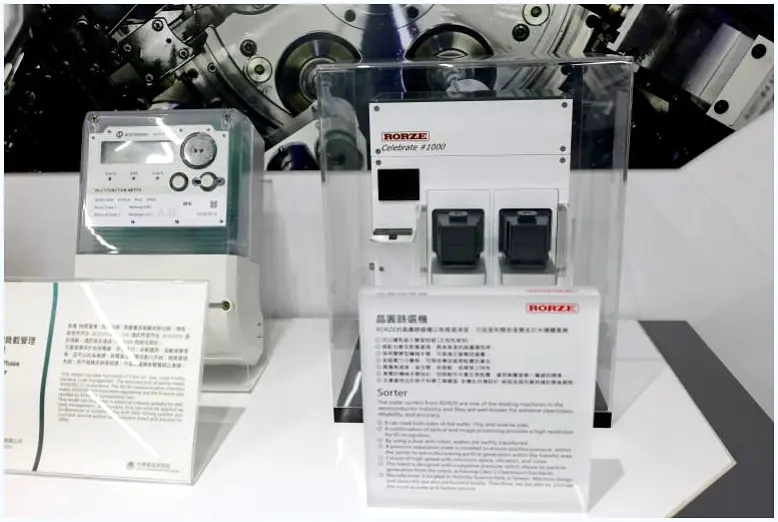
Fueled by the AI boom, the Taiwan Stock Exchange (TWSE) more than doubled its value between 2019 and 2025, soaring to $2.2 trillion. Regulatory tweaks in 2020 opened the floodgates for small-time investors, drawing millions into the market. By January, 13.77 million trading accounts existed — 60 percent of Taiwan’s population. The bourse hailed itself as a “cornerstone for inclusive prosperity.”
Yet, the wealth gap persists. While still more equitable than neighbors like Singapore or China, Taiwan’s Gini coefficient, a measure of wealth distribution, has climbed from 0.308 in 1980 (on par with Norway then) to 0.341 by 2024. A significant rise, nonetheless.
“I feel that the benefits of economic growth haven’t been distributed evenly,” says Ryan, another tech sector engineer, also preferring anonymity. “Some industries or asset holders benefit significantly, but ordinary office workers often experience a rise in prices and housing costs, rather than an easier life.”
Wei-ting Yen, an assistant research fellow at Academia Sinica, sums it up: the semiconductor and stock market booms have brought some relief, yes, but intensified the angst for countless others. A recent survey revealed 40 percent of Taiwanese voters felt financially “anxious” or “very anxious,” primarily due to soaring living costs, especially housing.
“Subjectively, they’re anxious that they’re not accumulating wealth and it’s not enough to help them buy a house or an apartment,” Yen observes. “Housing prices have been going crazy worldwide, and the stock market has been going crazy, [but] for people who do not have extra money to invest in those two options, it creates even more frustration and anxiety around them.” And that, perhaps, is the true cost of this dizzying, uneven prosperity.

No comments yet. Be the first to share your thoughts!