
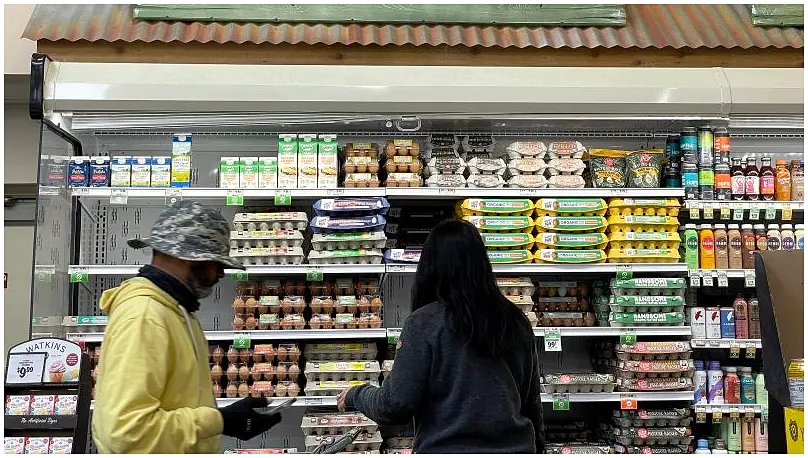
Americans tightened their belts dramatically in March. A surprise plunge in retail sales has economists and everyday shoppers alike glancing nervously at the horizon, wondering if the banking turmoil of last month was just a prelude.
The Commerce Department dropped a bombshell report Friday: retail sales, adjusted for seasonality but not the gnawing bite of inflation, tumbled a full 1% from February. That wasn't just a dip. It was far steeper than the 0.4% decline Wall Street had braced for. A significant pullback. And it follows a revised, albeit smaller, 0.2% slip the month prior.
The Shrinking Wallet: What's Behind the Chill?
Why the sudden frost? Investors are pointing fingers at a few culprits. One major factor: tax refunds. Or, rather, the lack thereof. The IRS, according to BofA analysts, issued a stunning $25 billion less in refunds this March compared to the same month last year. That’s a chunk of change missing from millions of household budgets. No wonder folks aren’t feeling flush.
Then there are the expired pandemic-era benefits. Enhanced food assistance, a lifeline for many, vanished in February. That’s real money gone from grocery carts and general spending.
“Consumers are expecting a downturn, they’re not feeling as dismal as they were last summer, but they’re waiting for the other shoe to drop.”
Spend big on appliances? Not so much. Department store receipts plummeted 3%. Gas stations, perhaps surprisingly given the general price fluctuations, saw sales slide 5.5%. Strip out those gas sales, and the overall retail spending still shrank by 0.6%.
“March is a really important month for refunds. Some folks might have been expecting something similar to last year,” Aditya Bhave, senior US economist at BofA Global Research, told CNN. That expectation, clearly, was unmet.
A Shaky Foundation? Jobs and Sentiment
Despite the retail woes, the US labor market, at first glance, seems to cling to some strength. Employers added 236,000 jobs in March. A respectable number, yes. But it’s a slower pace than the previous six months. Job openings, while still numerous, are down over 17% from their peak a year ago. A softening, perhaps. A cooling trend?
Michelle Meyer, North America chief economist at Mastercard Economics Institute, offered a glimmer of reassurance, or perhaps a carefully worded caveat: “The big picture is still favorable for the consumer when you think about their income growth, their balance sheet and the health of the labor market.”
Yet, the Federal Reserve’s own economists were already predicting a recession later this year. That was before Silicon Valley Bank and Signature Bank imploded. The effects of higher interest rates, slow-burning and relentless, are finally taking their toll.
Consumer sentiment? It worsened slightly during the bank failures in March. But it had already shown signs of fraying. The latest read, released Friday, showed sentiment holding steady in April – a small relief – but inflation expectations jumped a full percentage point, from 3.6% to 4.6%, thanks to rising gas prices. More pressure on wallets.
“On net, consumers did not perceive material changes in the economic environment in April,” said Joanne Hsu, director of the University of Michigan’s consumer surveys. But her follow-up to Bloomberg TV painted a sharper picture: “Consumers are expecting a downturn, they’re not feeling as dismal as they were last summer, but they’re waiting for the other shoe to drop.”
And that, perhaps, is the lingering fear. Not a crash, not yet. Just a quiet, collective holding of breath, waiting for the inevitable.


No comments yet. Be the first to share your thoughts!