
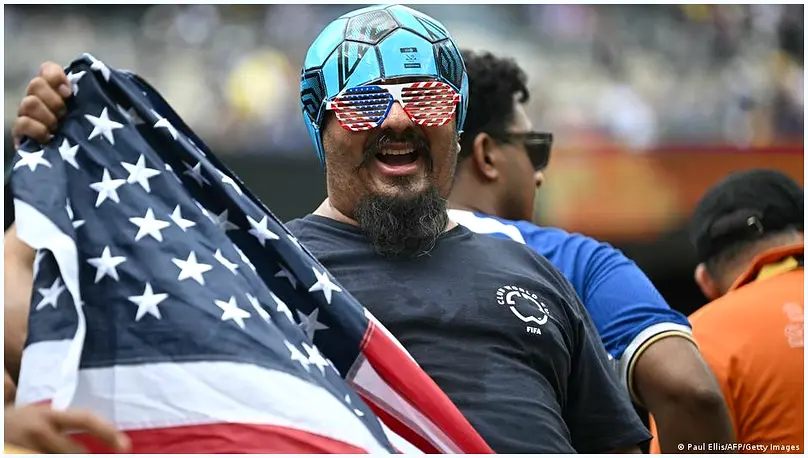
A legal storm is brewing around the 2026 World Cup. New York and New Jersey have fired off a subpoena at FIFA, demanding a full accounting of ticket pricing and the accuracy of those coveted seat locations. Fans, it seems, aren't just buying a game; they might be buying into a colossal headache.
This tournament, slated for mid-June across the United States, Canada, and Mexico, isn't just a record-breaker for its sheer scale. It's on track to be the most expensive World Cup in history. By a significant margin. And that's before a single ball is kicked in anger.
The criticism? Already widespread. Political and economic grievances have mounted, culminating in sharp words from prosecutors this week. They called it out: "sky-high prices for seats."
New York Attorney General Letitia James and her New Jersey counterpart, Jennifer Davenport, minced no words in a joint statement. Prices for 2026 matches? They "far exceeded the prices for any previous World Cup competition." A bold claim, but one backed by growing public frustration.
James didn't pull any punches. "New Yorkers have been waiting years for the World Cup to come to their backyard, and they deserve a fair shot at affordable tickets." Hard to argue with that. "No one should be manipulated into paying sky-high prices for seats, and fans should be able to trust that the tickets they purchase will be the ones they receive." Trust is a big word here.
The tournament's grand finale? July 19, at MetLife Stadium in New Jersey, the home of the Giants and Jets. A fitting stage for what's become a high-stakes legal battle.
"Being honest about ticket sales is not complicated. But FIFA has turned buying a ticket to the World Cup into a gauntlet of confusion, fake scarcity, and impossibly high prices."
That's Jennifer Davenport, nailing the sentiment of countless exasperated fans. It's more than just an inconvenience; it's a systemic frustration.
FIFA President Gianni Infantino, predictably, has defended his organization. He points to "dynamic pricing," a strategy he insists is necessary due to the notoriously high standard prices for US sports events and, of course, the monumental global demand. He even tossed in a blame-shift, citing US laws that, he claims, make it impossible to ban ticket resale after purchase. Convenient, perhaps.
But let's be real. All but the absolute cheapest tickets – a precious few, only available during the relatively low-stakes group stages – are demonstrably more expensive than typical US sports admission fees. Much more. The numbers are jarring.
Attending the final in July could easily set an ordinary fan back several thousand dollars. Think about that. That's up to five times the cost of witnessing the electrifying 2022 final in oil-rich Qatar. And for a historical perspective? Entry to the last US final in 1994 was roughly 20 times cheaper. Inflation? Sure. Exploitation? That's what the states are wondering.
"It's an honor to host the World Cup," Davenport reiterated, encapsulating the pride and the peril. "But the event is not an invitation to exploit our residents and visitors." A clear warning shot.
This isn't FIFA's first rodeo with cost scrutiny. Or scandal. Supporters' groups have already lodged a formal complaint with the EU. And let's not forget the supplementary costs – parking, train tickets, all grabbing their own unwanted headlines. FIFA has tried to placate, with a few gestures like releasing a very limited number of lower-price tickets. To no avail. The waters remain anything but calm.
The Lingering Question
So, as the clock ticks towards 2026, the question looms: Will FIFA finally be forced to play fair, or will fans continue to pay a premium for a dream that feels increasingly out of reach?
Fans deserve fair prices