
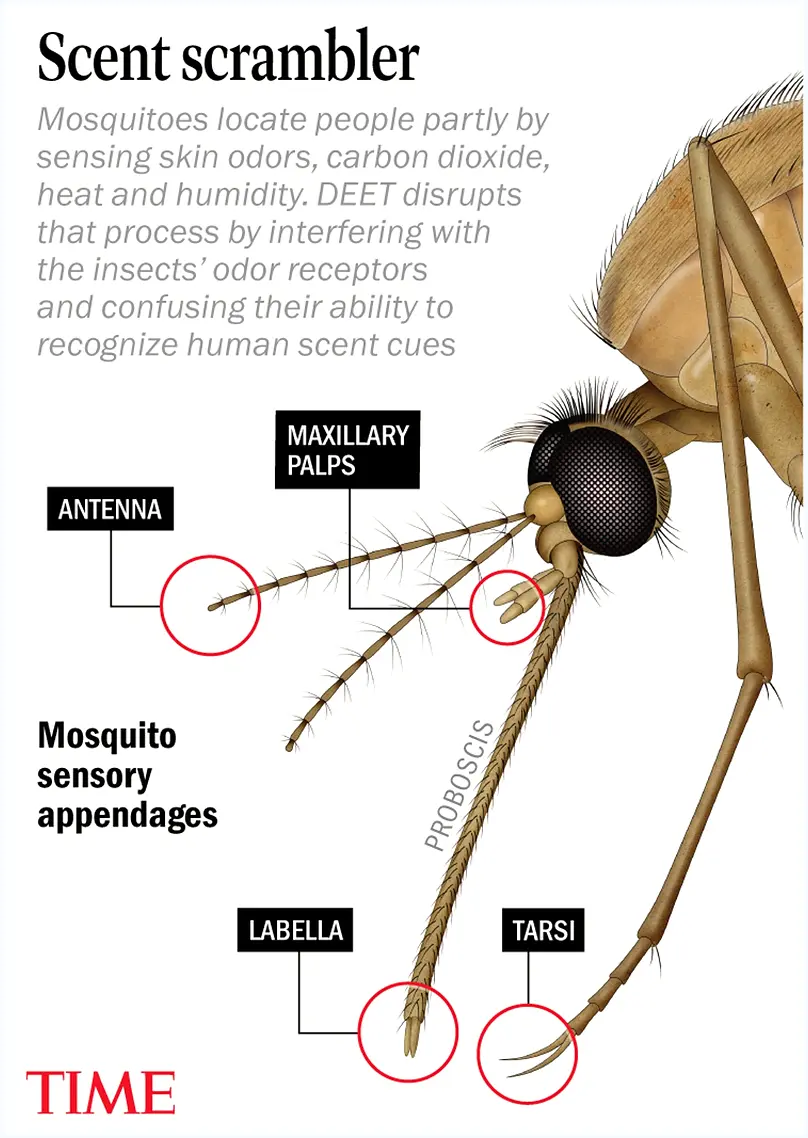
Nobody likes mosquitoes. These ubiquitous, often-lethal nuisances number in the trillions worldwide. They’re notorious vectors for a host of devastating diseases: malaria, dengue, West Nile, chikungunya, yellow fever, Zika. We spray them, swat them, and douse ourselves in repellents, believing we’re keeping them at bay.
But what if our primary defense is secretly betraying us?
A provocative new study published in the Journal of Experimental Biology posits a startling notion: we might actually be teaching mosquitoes to seek us out. The culprit? DEET, that venerable insect repellent we’ve trusted for decades. In some cases, it appears our strategic use of DEET could be having the exact opposite effect.
DEET—short for N,N-diethyl-meta-toluamide—emerged in 1946, a brainchild of a U.S. Department of Agriculture chemist. It quickly became the military’s go-to defense in steamy jungles and tropical environments. Its efficacy was attributed to a few theories: jamming mosquito smell receptors, imparting a bitter taste, or even mimicking natural repellent plants. The common wisdom was simple: DEET keeps them away. Until it doesn’t.
The critical flaw, uncovered by a Virginia Tech research team led by Clément Vinauger, an associate professor in biochemistry, comes down to one inconvenient truth: mosquitoes, though simple, learn. When freshly applied, DEET performs as advertised, deterring the tiny bloodsuckers. The problem arises as the scent begins to dissipate, lingering but no longer overwhelming. In this transitional phase, mosquitoes resume biting. Crucially, they begin to associate the fading chemical with a readily available blood meal. This isn’t just theoretical; it actively draws them to people wearing the very repellent meant to protect them.
“Mosquitoes are very smart and can outsmart our control tools,” says Vinauger. “DEET is a molecule that can be interpreted by the mosquito brain, and mosquitoes can learn to like it.”
Vinauger’s team didn’t just theorize. They put it to the test, exposing mosquito populations to various feeding trials during their peak hours. In one setup, mosquitoes were offered blood through a fine mesh, then exposed to DEET. Initially, the chemical didn't stop them feeding. Later, when the blood was removed but the DEET scent reintroduced, more than 60% of the insects returned to the mesh. They expected a meal.
“By training them, we were able to demonstrate that they can assign value,” Vinauger explained. “They can actually turn that molecule that innately is an aversive weapon into something that is attractive to them.”
A subsequent experiment presented two human hands to mosquitoes: one sprayed with DEET, the other bare. Mosquitoes previously "trained" to associate DEET with food attacked both hands indiscriminately. Their untrained counterparts, however, stuck to the unprotected hand. The findings held even when sugar, another mosquito food, replaced blood.
This isn’t to say DEET is now obsolete. Far from it. Its effectiveness remains high when used correctly. The key, Vinauger suggests, isn’t to apply one heavy dose and expect it to last all day. Instead, adherence to bottle directions, with frequent reapplication, is paramount. This prevents the chemical concentration on the skin from dropping to that treacherous, 'dinner bell' level.
“It’s the frequency of application, how often you need to put it back on the skin,” he insists.
Beyond DEET, other defenses persist. Screens on windows. Bed nets in malaria-prone regions. Eliminating standing water, a prime mosquito breeding ground, from flower pots to wading pools. Octenol, a chemical mimicking human breath, can lure them to zappers. And, of course, the age-old wisdom: long sleeves and pants. Still, this research offers a chilling reminder. We might just have as much to fear from the mosquito’s evolving intelligence as we do from its bite.
“Mosquitoes are very plastic,” Vinauger observes, a note of grudging admiration in his voice. “And the more we look at them, the smarter they appear.”



No comments yet. Be the first to share your thoughts!