
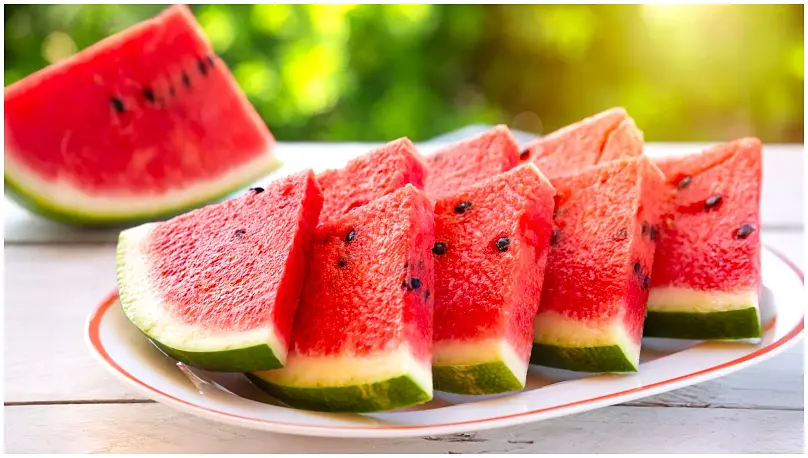
That summer staple, watermelon? It’s far more than just a refreshing treat. New scientific scrutiny suggests this iconic fruit might be quietly revolutionizing our understanding of diet quality and cardiovascular health. Forget simple hydration. It’s getting serious.
Initial findings, particularly those published in the journal Nutrients, indicate a compelling link: people who regularly include watermelon in their diets tend to boast healthier overall eating patterns. Their hearts, too, might be thanking them.
The Watermelon Effect: A Better Diet by Default?
Researchers dove deep into data from the National Health and Nutrition Examination Survey (NHANES). They weren't just curious; they wanted to see a clear distinction. And they found one. Children and adults across the U.S. who regularly ate watermelon weren’t just enjoying a sweet snack. They were building better diets.
Specifically? Watermelon consumers showed higher intake of dietary fiber, magnesium, potassium, Vitamin C, Vitamin A, lycopene, and a host of other beneficial carotenoids. At the same time, they were consuming less added sugars. Less saturated fat. A potent combination.
This isn't trivial. Most Americans consistently miss their recommended daily fruit intake. We’re talking half the amount advised by the Dietary Guidelines for Americans. Watermelon? It’s an easy, tasty workaround.
Your Heart's New Best Friend?
The plot thickens with heart health. A separate clinical trial out of Louisiana State University explored watermelon juice’s potential to safeguard blood vessel function. Even during episodes of elevated blood sugar. This wasn't guesswork; it was a randomized, double-blind, placebo-controlled crossover study on healthy young adults.
The focus? L-citrulline and L-arginine. These aren’t just tongue-twisters. They are naturally occurring watermelon compounds, vital for nitric oxide production. Nitric oxide helps blood vessels relax. Expand. Essential for robust circulation. For cardiovascular health.
“We acknowledge that while the sample size was small (18 healthy young men and women) and more research is needed, this study adds to the current body of evidence supporting regular intake of watermelon for cardio-metabolic health.” — Dr. Jack Losso, Ph.D., Professor at Louisiana State University's School of Nutrition and Food Sciences.
Indeed, the study revealed that watermelon juice supplementation helped maintain vascular function. It even influenced heart rate variability during hyperglycemia. A fascinating finding.
The Future of Fruit?
Since these initial reports, more reviews and meta-analyses have emerged. The scientific community is clearly intrigued. Watermelon consumption, or even just L-citrulline supplementation, appears linked to improved blood vessel flexibility. Better circulation. Think pulse wave velocity. Endothelial function. These are significant markers.
Why the keen interest in watermelon? It’s one of nature's richest sources of L-citrulline. This isn't just a fun fact; it could be key to boosting nitric oxide, improving blood flow, and fortifying the cardiovascular system. Experts, however, stress the need for larger, longer-term studies. Science moves cautiously.
Don't forget lycopene. Watermelon is packed with it. This powerful antioxidant fights oxidative stress. Another feather in its cap for heart health. Especially those intensely red varieties.
Ultimately, beyond the lab coats and complex compounds, watermelon remains an incredibly nutrient-dense fruit. Just 80 calories for a two-cup serving. Twenty-five percent of your daily Vitamin C. Eight percent of Vitamin B6. And 92% water. Hydration, unlocked.
So, the next time you carve into that familiar green rind, perhaps you’ll see more than just a sweet, juicy slice. You might just be looking at a quiet, unassuming powerhouse. A nutritional workhorse. Or maybe, it's just a fruit. But a truly exceptional one, isn't it?



No comments yet. Be the first to share your thoughts!